Is surgical steel good for piercing? Everything to know
ByPerry Xu
Are you looking to buy jewelry to wear after a piercing? If so, then you have come to the right place. In this guide, we’ll provide you with insights into the requirements for safe piercing jewelry and also debate: Is surgical steel good for piercing? So, keep reading to get an in-depth analysis of piercing jewelry materials!
Contents
Why do you have to wisely Select Piercing Jewelry Materials?
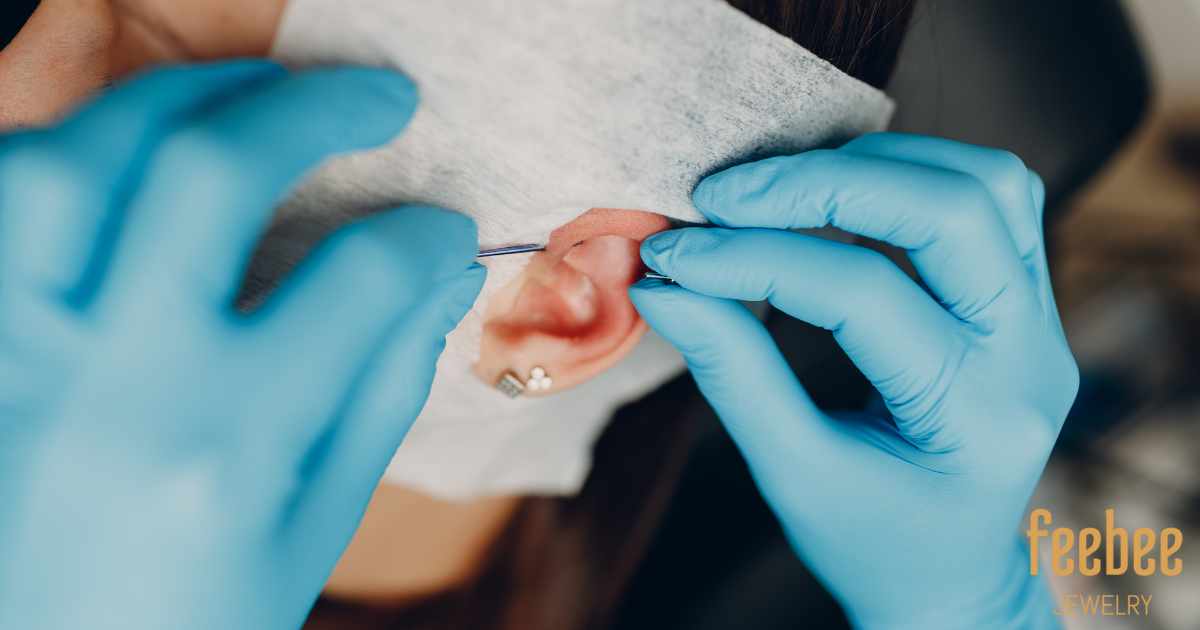
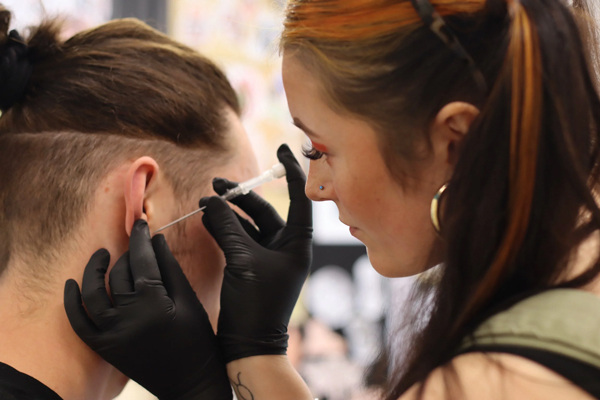
Piercing is basically a process of making a hole in the ear or nose using a needle, thus creating a fresh wound. However, to keep this hole open, you have to immediately wear the jewelry after piercing.
So, the material of jewelry you wear basically would remain in constant contact with your body, affecting the wound’s healing process as well. That’s why, if you select the wrong jewelry material, then it may cause allergies or other skin infections.
Source: urbaninktattos
Key material requirements for piercing jewelry
So, to ensure that piercing jewelry is safe for the skin, it must meet the following requirements!
Biocompatibility: First of all, keep in mind that the jewelry material you choose shouldn’t trigger any harmful reaction in the body. This is because piercing basically creates a wound in the body or tissue, so if the material were safe, then the healing process would also become faster, and you would feel comfortable.
So, the piercing materials you choose should meet the implant-grade standards. For instance,
| Material Type | Common Grade | Relevance to piercing jewelry | |
| ASTM F138 | Implant-grade surgical steel | 316L / 316LVM | Ensures low nickel release and high biocompatibility |
| ASTM F136 | Implant-grade titanium | Grade 23 | Nickel-free, lightweight, highly biocompatible |
| ISO 5832-1 | Stainless steel for implants | 316L | Guarantees corrosion resistance and safety for body contact |
Low or No Nickel Release: Moreover, another thing that you should consider is checking the nickel release. You know nickel (Ni) is the most common skin allergen found in metal alloys. However, its content doesn’t matter; but the thing what matters is how much of it can be released from the metal.
According to the European nickel directive, the jewelry that releases no more than 0.05 µg/cm²/week of nickel is generally considered safe for skin.
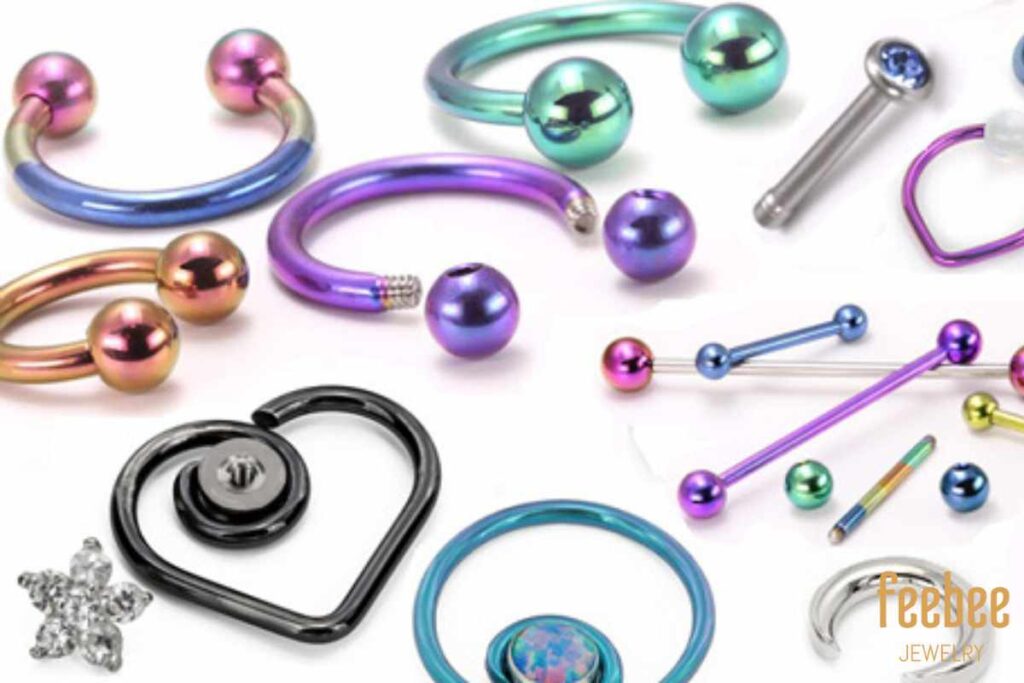
Corrosion Resistance: Next, the jewelry you wear constantly gets exposed to body sweat, saline, or other fluids, right? So, if the jewelry is of poor quality, then on exposure to such moisture, it corrodes easily, thus may irritate the wound.
That’s why you have to check the material composition, like metal containing chromium, basically has the ability to form a Cr2O3 protective layer when exposed to moisture or air. Thus protecting the jewelry from any kind of rust, stain, etc.
Smooth, Non-Porous Surface: Furthermore, the surface of the jewelry is also important. This is because many scientific studies have revealed that porous or, you can say, rough surfaces can trap the moisture, bacteria, or skin cells in them. Thus, they become stuck together to form a biofilm ( a protective layer making it harder for bacteria to kill).
On the other hand, mirror-like polished surfaces prevent such a process from happening, thus ensuring hygiene during the healing process.
Sterilization compatibility: Last but not least, the professional piercers at their studios also do autoclave sterilization of the jewelry. It is the process that uses high steam or pressure to fully kill viruses, bacteria, or microbes to make it 100% safe for skin. So, the material must be strong enough to withstand high pressure or steam.
Is surgical steel good for piercing?
Absolutely yes, surgical steel (316L/316LVM) is a good choice for piercing. It’s a refined form of stainless steel having high durability and safety. However, for better decision, let’s weigh down both the benefits and drawbacks of surgical steel for piercing!
Benefits of Surgical Steel for Piercings
Hypoallergenic qualities: First of all, surgical steel grades like 316L/316LVM, though they have 10-14% nickel. However, this nickel is actually locked down in the structure because of a protective Cr2O3 surface layer. Thus, there are low chances of its escape from the metal to cause skin irritation. Thus making it hypoallergenic.
Also, the 316LVM, because of the vacuum-melting process, has further reduced impurities, making it even safer than 316L.
Durability: Moreover, surgical steel is also highly durable because of the dense metallic structure of iron, chromium, and nickel in it. As a result, it resists dents or even micro-bends more efficiently compared to other softer metals.
Also, one thing to note here is that fewer cracks mean there are fewer places for bacteria to reside, thus it wouldn’t interfere with the wound healing.
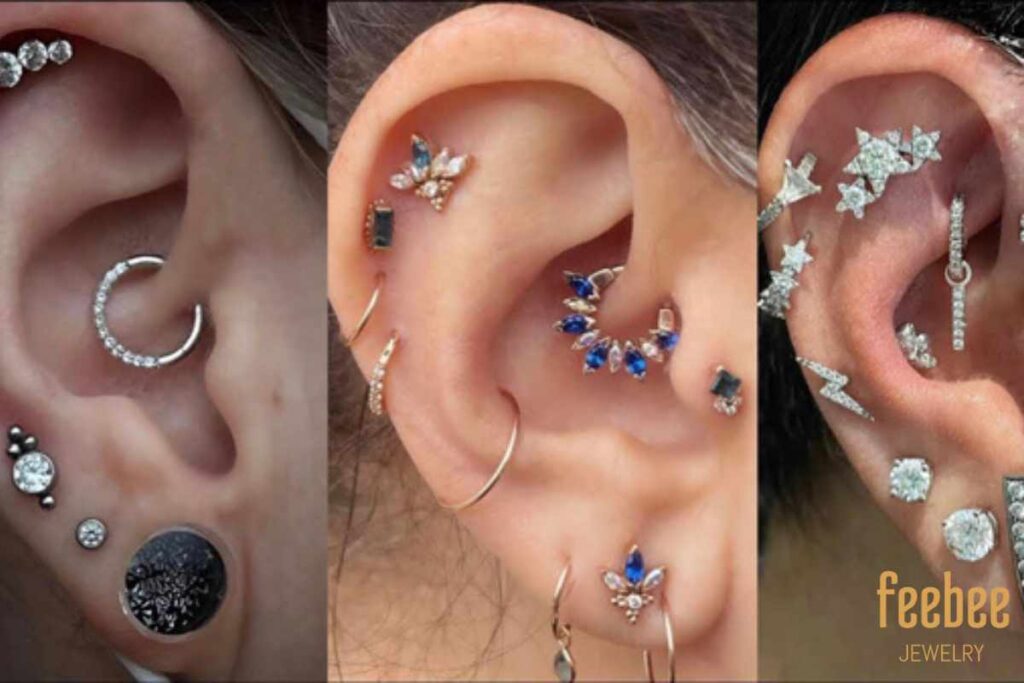
Corrosion resistance: In addition, surgical steel also can prevent rusting, staining, etc., because of its composition.
| Typical Content/Range | Function | Benefits of piercing | |
| Chromium (Cr) | ~16–18% | Forms a thin, self-healing chromium oxide (Cr₂O₃) layer | Provides excellent rust resistance and biocompatibility |
| Molybdenum (Mo) | ~2–3% | Increases resistance to pitting & crevice corrosion in chloride-rich sweat/saline | Prevents localized corrosion when exposed to sweat and tears |
| Carbon (C, Low “L” Grade) | ≤0.03% | Prevents chromium carbide precipitation → maintains Cr₂O₃ layer | Ensures long-term stability and safety |
Shine and appearance: Lastly, surgical steel has a mirror-polished or non-porous smooth surface. As a result, there would be no chances of bacteria to form biofilms. Hence, it’s easy to clean and remain shiny.
Potential Drawbacks of Surgical Steel
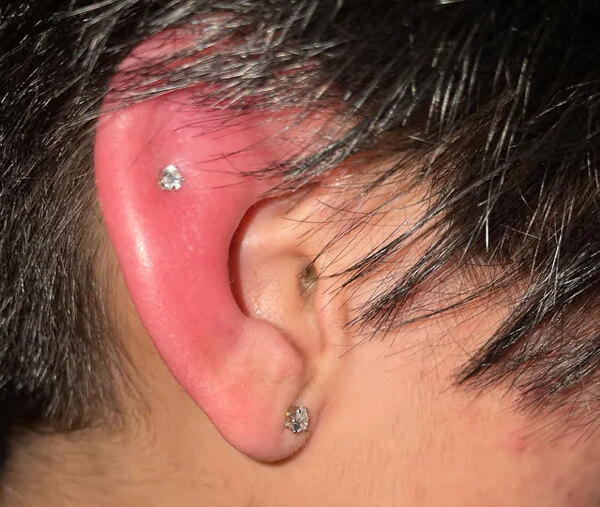
Nickel Release and Sensitivity: Although nickel is locked because of the Cr2O3 protective layer in the surgical steel. However, when your jewelry continuously remains in a moist environment, especially sweat, then the problem occurs.
This is because sweat mostly has chloride ions, which are aggressive towards the Cr2O3 protective layer. This may cause slight pitting, thus causing nickel to escape. Also, the sweat has an acidic pH of about 4.5-6.0; thus, this also interferes with the protective layer, like destabilizing it. Hence, increasing the chances of some nickel to be released.
Source: Thai law forum
Unsuitability for Fresh Piercings: Because of the chances of nickel release as mentioned earlier, it’s best recommended not to use surgical steel immediately after piercing. This is so that sensitive people would instantly get irritated, itching, etc.
Weight and Comfort Issues: Another major concern is that surgical steel has a density of about 7.9 g/cm³, which is 2x compared to titanium ( 4.5g/cm³). Thus, wearing such jewelry for everyday use after piercing may cause discomfort for you.
Surgical Steel vs. Other Piercing Materials
You know, there are many other piercing jewelry available other than surgical steel. Let’s have a quick look at their pros and cons, so you may understand where the surgical steel actually stands!
| Pros | Cons | Best For | |
| Surgical Steel | Affordable, durable, corrosion-resistant, widely available. | May release trace nickel, not ideal for severe allergies. | Everyday use, budget-friendly choice. |
| Titanium | Nickel-free, lightweight, biocompatible, strong. | More expensive than surgical steel. | Sensitive skin, initial piercings |
| Niobium | Hypoallergenic, safe, anodizable colors. | Less widely available. | Allergy-prone users who want color options. |
| Gold (14k+) | Safe if nickel-free, attractive, luxury appeal. | Costly, softer metal, prone to scratches. | Healed piercings, stylish look. |
| Acrylic / Bioplast | Safe if nickel-free, attractive, luxury appeal. | Not durable, harder to sterilize. | Short-term or decorative wear. |
FAQs
What is better for piercings, titanium or surgical steel?
Both of them are used for piercings, depending on your needs. For instance, if you have a fresh piercing, then titanium, being 100% nickel-free, is the safest option. However, if your piercing is healed, then surgical steel is the cheapest option to consider.
What type of metal is best for piercing?
Any hypoallergenic metal is usually considered good for piercing. For instance, surgical steel, titanium, niobium, 14K+ gold, etc., are commonly used in piercing jewelry.
Does surgical steel piercing rust?
Actually, the surgical steel piercing wouldn’t rust, but yes, if you wear it daily, then after some time, constant exposure to sweat (having acidic pH) may even destabilize the protective layer. Thus, it may start corroding.
Conclusive Remarks
In short, on debate over is surgical steel good for piercing? Now, you can say that yes it is a good option because of its hypoallergenic properties, durability, corrosion resistance, and non-porous surface. However, nickel ions are susceptible to leaching out in constant exposure to the body’s sweat, so it’s best to use it when your piercing has healed.
However, other piercing materials are 100% nickel- free like titanium, niobium, etc, but they are much more expensive compared to surgical steel. So, the choice is yours. If you want to buy custom stainless steel jewelry free of nickel for piercings, then we at Feebee jewelry are here to help you. Feel free to contact us today!

Perry Xu