Is surgical steel hypoallergenic? An ultimate guide
ByPerry Xu
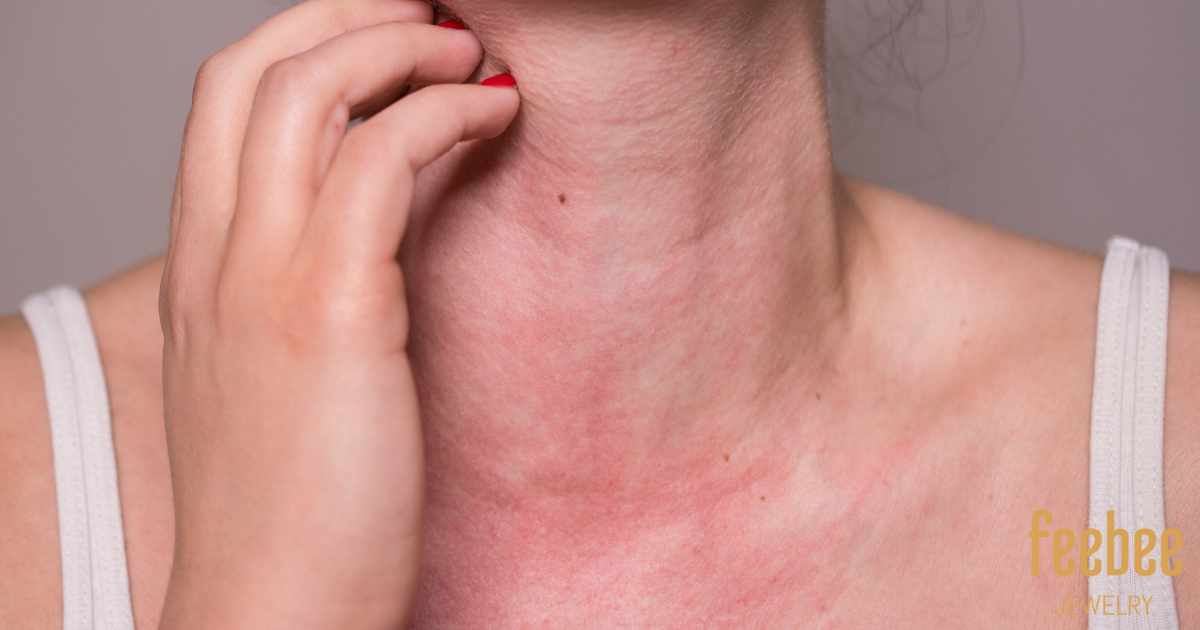
Are you worried about wearing metallic jewelry because of skin allergies? If so, then don’t take stress; many people have the same problem because of sensitive skin. That’s why many jewelers now use metals that have zero to low chances of causing skin reactions.
Nowadays, people are debating: Is surgical steel hypoallergenic? The answer is yes. However, keep reading this post to understand the depth of why it’s hypoallergenic and much more.

Source: taccori
Contents
What is meant by the word “hypoallergenic”?
The word hypoallergenic is basically a combination of two words: hypo ( Greek word meaning less or below normal) + allergenic ( something which may trigger allergic reactions). Thus, you can say that anything that is less likely to cause an allergic reaction on the skin is hypoallergenic.
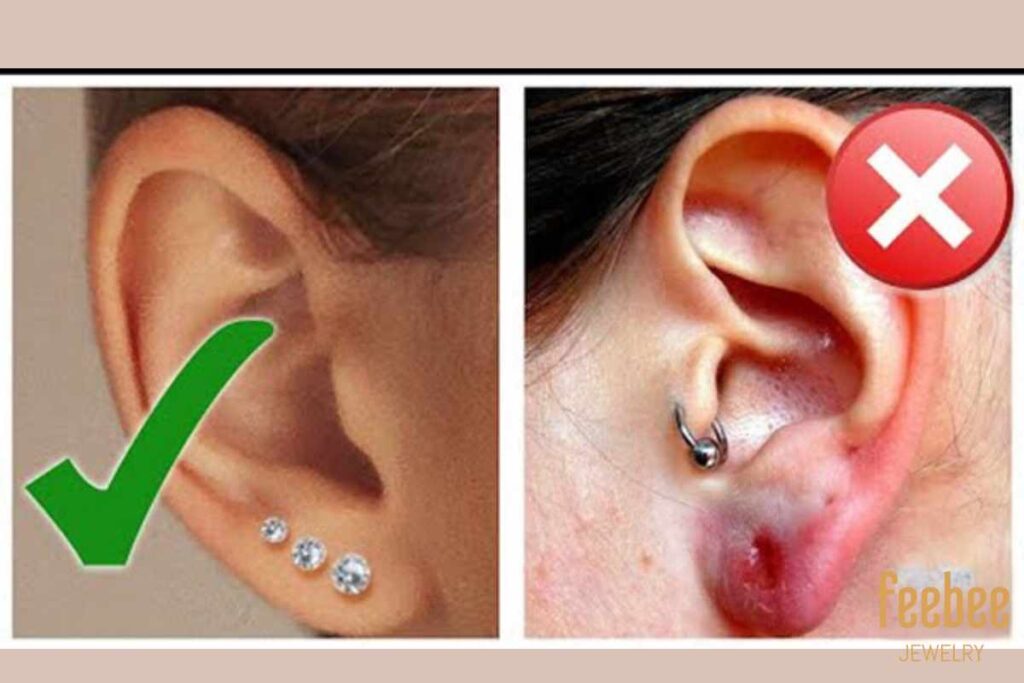
Keep in mind that hypoallergenic is a general term; you can use it for metals, skin care products, textiles, etc, where there are fewer chances of triggering allergies on the skin.
Common metal allergens
| Why It’s Used in Metals | How can it cause allergies | Typical Reactions on Skin | |
| Nickel (Ni) | Adds strength, shine, and corrosion resistance | Nickel ions can slowly release and bind to skin proteins, triggering an immune response | Itching, redness, rash, blisters |
| Cobalt (Co) | Increases hardness and wear resistance | Can dissolve slightly in sweat, causing skin irritation | Dry patches, eczema-like reaction |
| Chromium (Cr) | Prevents rust and improves durability | In some forms, chromium ions irritate skin and trigger sensitivity | Redness, swelling, burning sensation, irritation at contact points |
Why Metal Allergies Happen?
You might be thinking, how can wearing metallic jewelry cause so many problems? Our body has an immune system that has the responsibility to protect our body. However, some metallic jewelry may contain positively charged Ni²⁺ (nickel) or Co²⁺ (cobalt) ions.
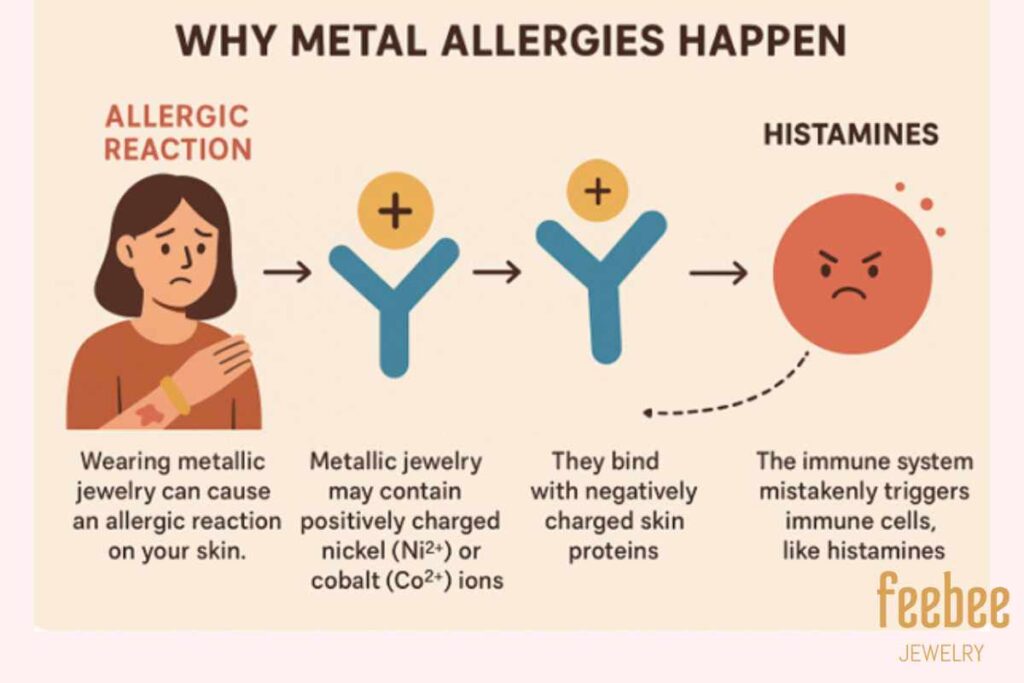
So, the problem is that when they get in touch with skin, then they may bind with our negatively charged skin proteins (as opposite charges attract each other) and form complexes. Thus, our immune system is activated and thinks such complexes are very harmful as they may change the shape of the protein structure.
Since our immune system mistakenly takes metal ions as invaders, thus triggers the immune cells, like histamines, which may cause visible allergic reactions on the skin.
However, every person has their unique immune system; you might notice that wearing the same jewelry causes a skin reaction to you, while your friend has no problem at all.
Is Surgical Steel Hypoallergenic?
Absolutely yes, surgical steel is used in medical implants, jewelry, etc, and is considered hypoallergenic. You know it is basically an iron-based metal alloy that also contains nickel ( 10-14%), chromium ( 16-18%), and molybdenum (2-3%) for increased strength and corrosion resistance.
You might be thinking that it contains nickel, so why is it hypoallergenic? There are two things, like nickel content and nickel release, that you need to understand. Don’t think that the metal containing a high amount of nickel would cause allergies.
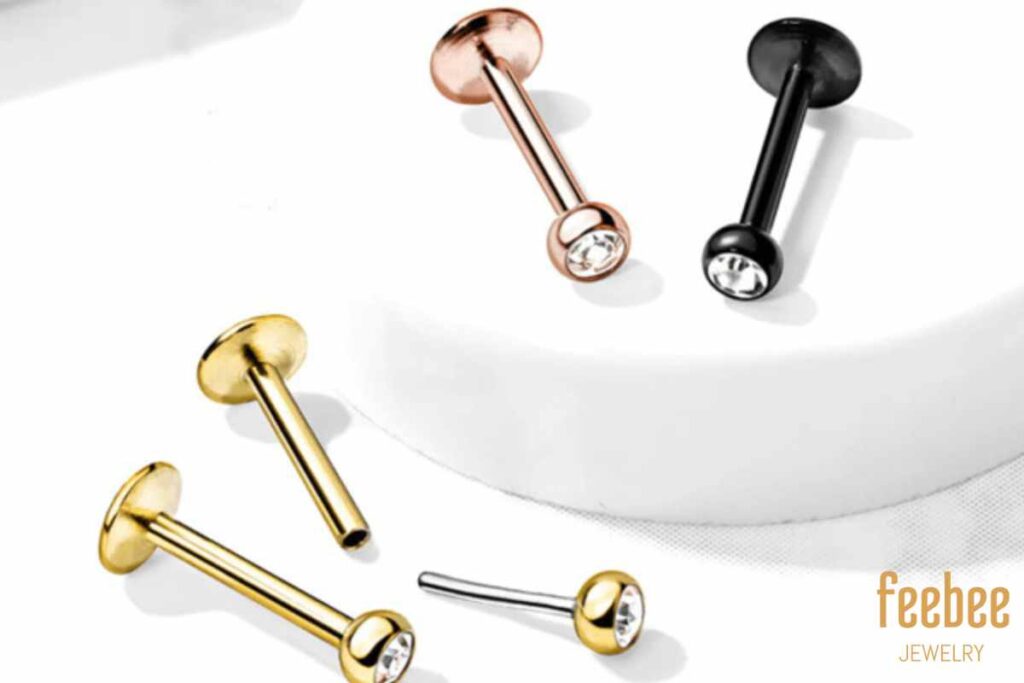
Actually, the thing that matters is how much nickel is able to be released from the metal to touch the skin. That’s what happened in surgical steel. It actually locks down the nickel and prevents it from escaping.
Role of low carbon content in surgical steel:
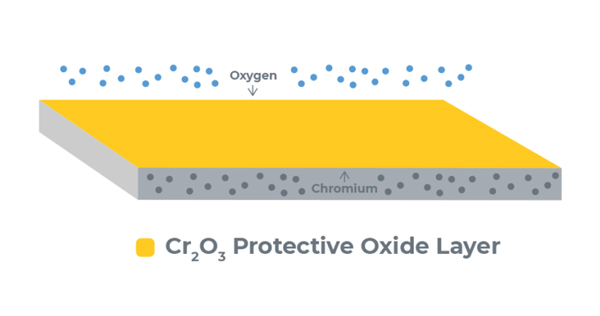
In surgical steel, there is a low amount of carbon content ( around 0.03%) as compared to regular stainless steel. As a result, chromium metal present in this alloy freely undergoes oxidation to form a thin protective layer at the surface of surgical steel, which mostly prevents the nickel ions from escaping and coming in contact with skin.
Source: SendCutSend
On the other hand, if carbon content were to get higher, like in stainless steel, then this Cr would basically react with Cr and form Chromium carbide precipitates. Thus, there would be reduced chances of formation of Cr2O3 protective layer, you know this process is basically call to us as sensitization which occurs during welding or other high temperature treatments.
That’s why surgical steel in jewelry comes in two grades, from 316L and 316LVM, showing low carbon content, thus considered safe for sensitive skin.
Standards Governing Nickel Emission from Skin-Contact Metals
Next, to give you a clear idea whether a jewelry (even if surgical steel) is hypoallergenic or not, there are many safety standards in place. They all ensure that nickel is released from the metal jewelry within safe, specific limits.
Let’s understand these standards, so if you see these tags on jewelry you are buying, then it would definitely give you the assurance that it’s safe for your skin.
EU Nickel Directive (1994/2009/EC)
EU nickel derivative is a European regulation that, as the name suggests, was designed basically with the intention to keep people safe from nickel allergies. It actually set the limitations for nickel release from the jewelry. For instance,
| Nickel Release Limit | Testing Method | |
| Earrings, bracelets, rings | ≤ 0.5 µg/cm² per week | Nickel leaching in synthetic sweat solution |
| Piercings (ear, nose, body) | ≤ 0.5 µg/cm² per week | Extended nickel leaching tests to mimic long-term contact |
ASTM Specifications (American Society for Testing and Materials)
Next, there is an ASTM standard, which is a globally accepted certification ensuring that materials like metals (used in medical equipment or in jewelry), paints, and plastics have reliable performance. However, talking bout the surgical steel jewelry, it has the following requirements!
| Applicable steel type | Testing methods | Purpose | |
| ASTM F138 | 316L | Leaching in physiological solution; chemical composition & corrosion tests | Used in surgical implants and high-quality piercings; ensures biocompatibility and low allergy risk |
| ASTM F139 | 316LVM | Vacuum remelting; tensile, hardness, and intergranular corrosion tests | Ideal for surgical jewelry and body piercings; very low risk of allergic reactions; safe for sensitive skin |
Comparing Surgical Steel to Other Hypoallergenic Metals
Let’s compare surgical stainless steel jewelry with other hypoallergenic metals. This comparison would give you a better idea of where surgical steel stands. So, look at the table below, here I’ve provided you a quick overview of different hypoallergenic metals like Titanium, Gold, Niobium, and surgical steel with their pros and cons.
| Surgical steel | Titanium | Niobium | Gold ( high karat) | |
| Composition | Iron-based alloy with 16–18% chromium, 10–14% nickel, 2–3% molybdenum; | Pure titanium | Pure niobium | 24K gold is pure; lower-karat alloys may include nickel |
| Nickel Release / Hypoallergenic Property | Very low nickel release due to protective Cr₂O₃ layer; mostly hypoallergenic | 0% nickel; completely hypoallergenic | Naturally nickel-free; hypoallergenic | Pure gold: safe; plated/low-karat gold: may release nickel |
Pros | Affordable, durable, corrosion-resistant; suitable for most people | Excellent for severe allergies; very strong and corrosion-resistant | Safe for sensitive skin; can be anodized for color | Luxurious, soft, corrosion-resistant |
Cons | Small risk of reaction for extremely sensitive skin | More expensive; harder to work with for intricate designs | Less common; heavier than titanium | Expensive; plated gold can wear off and expose base metals |
| Use cases | Jewelry, body piercings, long-term wear | Medical implants, sensitive-skin jewelry, and body piercings | Body jewelry, piercings | Rings, earrings, bracelets |
FAQs
Which metal is more hypoallergenic, surgical steel or titanium?
Titanium is clearly more hypoallergenic compared to surgical steel. This is because it contains 0% nickel, so there are very low chances of any allergy. On the other hand, in surgical steel, despite protective layers to lock nickel (10-14%), there still exist small risks for skin reactions on extremely sensitive skin.
What metal is 100% hypoallergenic?
There are many metals like titanium, niobium, platinum, or 24K gold, all of which are 100% hypoallergenic because they are pure and don’t contain any nickel at all. However, at the same time, they are much more expensive compared to others.
What is the most hypoallergenic stainless steel?
The most hypoallergenic stainless steel is usually 316LVM. This is because, first of all, it has low carbon content and is also vacuum melted, which further removes any impurities. Thus, it is generally considered the safest option even than 316L.
Final verdict
So, on question: is surgical steel hypoallergenic? You can clearly say yes, it is. However, if you have extremely sensitive skin, then you can look for other options like titanium, niobium, etc, which are 100% hypoallergenic and free of nickel, but they are very expensive to buy.
If you’re running a jewelry brand and want to add stainless steel jewelry pieces, then you can contact us at Feebee Jewelry. We are custom stainless steel jewelry manufacturers having 10+ years of production experience, and all of our products are free of harmful substances like nickel, lead, etc. So, contact us today!

Perry Xu