What is Stainless Steel Jewelry?
ByPerry Xu
What is stainless steel jewelry? This is one of those questions that people used to ask when their budgets got tight or their plating on their jewelry wore thin. But now stainless steel jewelry is showing up in a different conversation. It is showing up in conversations about longevity that don’t start with luxury.
Stainless steel isn’t pretending to be something else. It is durable and made to last. In today’s guide, we look at what this metal is made of, why it performs differently, how it compares to other metals, and how to care for it properly. Let’s get started.
Contents
- 1 What Is Stainless Steel Jewelry Made Of?
- 2 Why Stainless Steel Jewelry Performs Differently?
- 3 Advantages of Stainless Steel Jewelry
- 4 Stainless Steel vs. Other Jewelry Metals: What You’re Really Choosing?
- 5 Misconceptions About Stainless Steel Jewelry
- 6 How to Keep Stainless Steel Jewelry Looking Its Best?
- 7 FAQs
- 8 Final Thoughts
What Is Stainless Steel Jewelry Made Of?
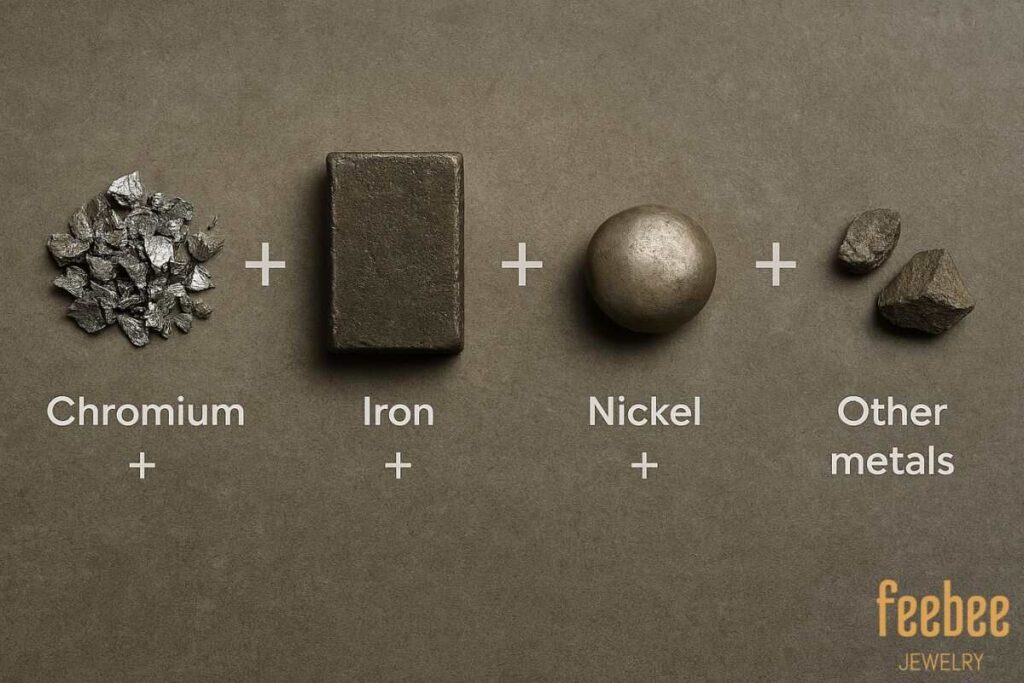
What is stainless steel jewelry exactly? Stainless steel jewelry is made of a mix of elements—each one added to boost strength and resistance. In the jewelry industry, you’ll mostly come across the following two types: 316L and 304. Both of these are durable, but when it comes to handling moisture and everyday wear, 316L performs better and is the preferred choice when it comes to long-lasting wear.
Let’s have a look at what stainless steel jewelry is made up of and why it matters:
Iron
Iron is the backbone of stainless steel and is what gives the metal its strength, structure, and durability. Without iron, stainless steel jewelry won’t have that “toughness” for which it is known.
Chromium
Chromium is the element that keeps rust from forming. When the stainless steel jewelry is exposed to air, chromium helps to form a thin, stable oxide layer on the surface. This layer then acts like a shield to prevent the moisture and oxygen from penetrating deeper into the metal and causing corrosion.
Molybdenum
This element is mostly found in 316L, and its function is to add another layer of protection. It helps stainless steel resist pitting and corrosion, especially in environments where there is more sweat, salt, and humidity involved.
Nickel
Nickel’s job is to add strength and shine. But it is important to note that it is also sadly the element that is responsible for skin irritation.
In 316L stainless steel, the nickel is locked in, which makes it far less likely to trigger any skin reactions. It’s not nickel-free, but it’s nickel-safe for most people, especially when it’s compared to lower-grade metals.
Why Stainless Steel Jewelry Performs Differently?
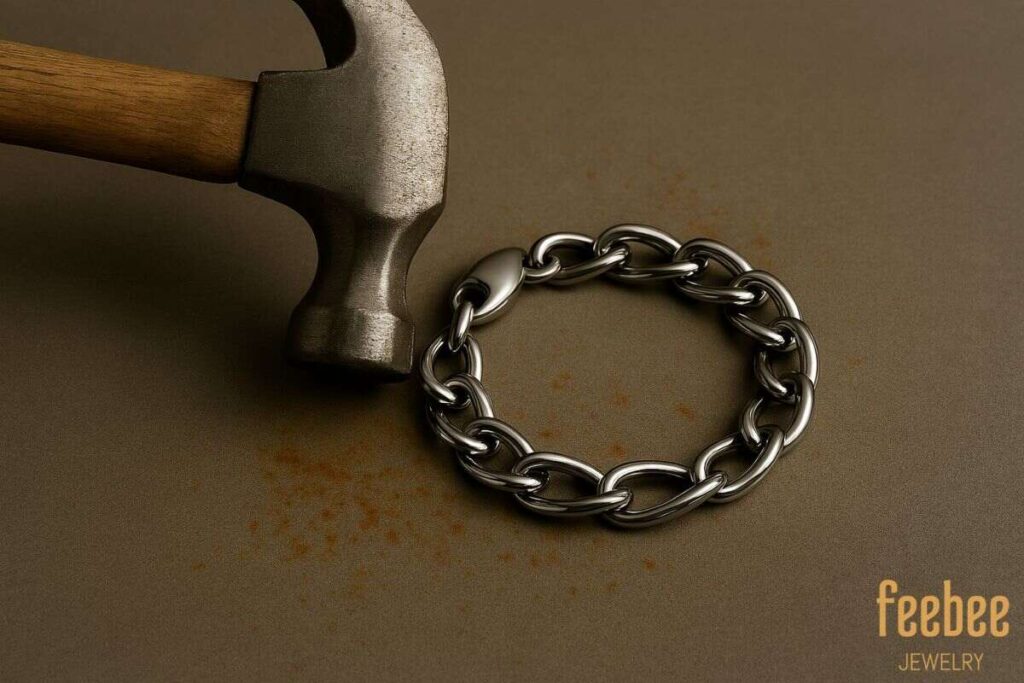
Stainless steel jewelry doesn’t act like most metals. It doesn’t tarnish when it hits air, it doesn’t scratch easily, and best of all, you don’t have to treat it like it’s fragile.
Precious metals like gold and silver are beautiful, but they are soft and tend to bend, dull, and show wear after some time. Brass and copper oxidize fast and can leave marks on your skin. Stainless steel doesn’t do any of this because it is made to last.
The metal itself is what makes stainless steel jewelry different. It’s strong enough to keep its shape, even if you wear it every day. You can shower with it, toss it in your bag, and forget it on your nightstand. You can rest assured that it won’t flake, fade, or lose its finish. It stays put.
And what if your skin is picky? Well, surgical-grade stainless steel like (316L) has nickel, but it’s bonded tightly, so most people won’t have any allergic reactions to it. If you’ve had trouble with other metals in the past, stainless steel is the safer bet.
Stainless steel jewelry is not just durable—it’s low-maintenance, consistent, and kind to your skin. If you’re questioning how long it really lasts, we break it down here: How long does stainless steel jewelry actually last?
Advantages of Stainless Steel Jewelry
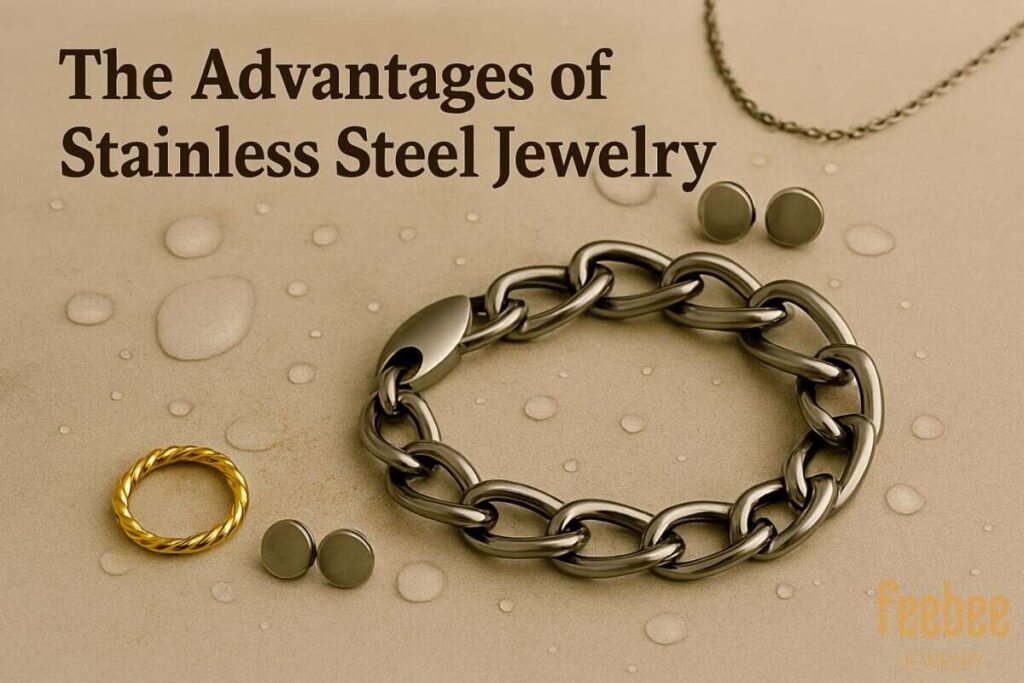
Stainless steel jewelry isn’t flashy, and it’s not precious. But you know what? It keeps on showing up again and again for good reason. It is reliable and wearable. Some of the advantages of stainless steel jewelry are pretty obvious. It holds up, it doesn’t ask for much, and it won’t break your bank.
But there is more to stainless steel jewelry than just its durability and price. It is the metal you choose to go with when you want something that will last and that you don’t want to fuss over.
It’s also a thoughtful choice for anyone who has sensitive skin, cares about sustainability, or just wants jewelry that can keep up. Whether it’s a bold or delicate chain, stainless steel jewelry will stay put and stay in rotation.
It’s not perfect. And not everyone will love it. But for the people who get it, it’s enough. You can have a look at the full list of pros and cons of stainless steel jewelry over here.
Stainless Steel vs. Other Jewelry Metals: What You’re Really Choosing?
When it comes to the difference between stainless steel jewelry and other metals, stainless steel jewelry isn’t trying to compete. It is quietly becoming the go-to piece that will last. Let’s have a look at the key differences in the table below.
| Factor | Stainless Steel Jewelry | Precious Metals (Gold, Silver, Platinum) | Brass (Base Metal) |
| Production Process | It is mass-produced, often recycled. It is consistent and low-impact. | It is mined from limited resources.The cost is higher and the production is slower. | It is easy to produce, but it is less refined. It is typically used in costume jewelry. |
| Price & Value | It is affordable and built to last, even on a budget. | There is a high upfront cost. It is time and again used as heirlooms or an investment piece. | Very cheap. But it is prone to tarnishing and discoloration. |
| Durability | It is strong, scratch-resistant, and holds its shape. Plated or coated styles may fade over time. | It is a softer metal that scratches, bends, or dulls if it is worn frequently. | It is prone to tarnishing, dents, and turning your skin green. |
| Skin Sensitivity | 316L stainless steel is nickel-safe. Most people don’t experience any irritation. | It is generally safe. But it is possible for some alloys to cause irritation. | It is common to cause irritation and discoloration. |
| Look & Feel | It looks cool-toned, modern, and minimal. It has options: it can be raw or plated (gold, black, etc.) | It looks warm, classic, and romantic. It has a natural shine and patina over time. | It resembles gold in color and shine, but lacks depth. Its plating fades quickly. |
| Care and Maintenance | It is low maintenance when it doesn’t have any plating. The plated styles need gentle care to preserve the color. | It requires regular cleaning, polishing, and sometimes even replating. | It also requires regular cleaning. It tarnishes easily and sadly doesn’t age well. |
Misconceptions About Stainless Steel Jewelry
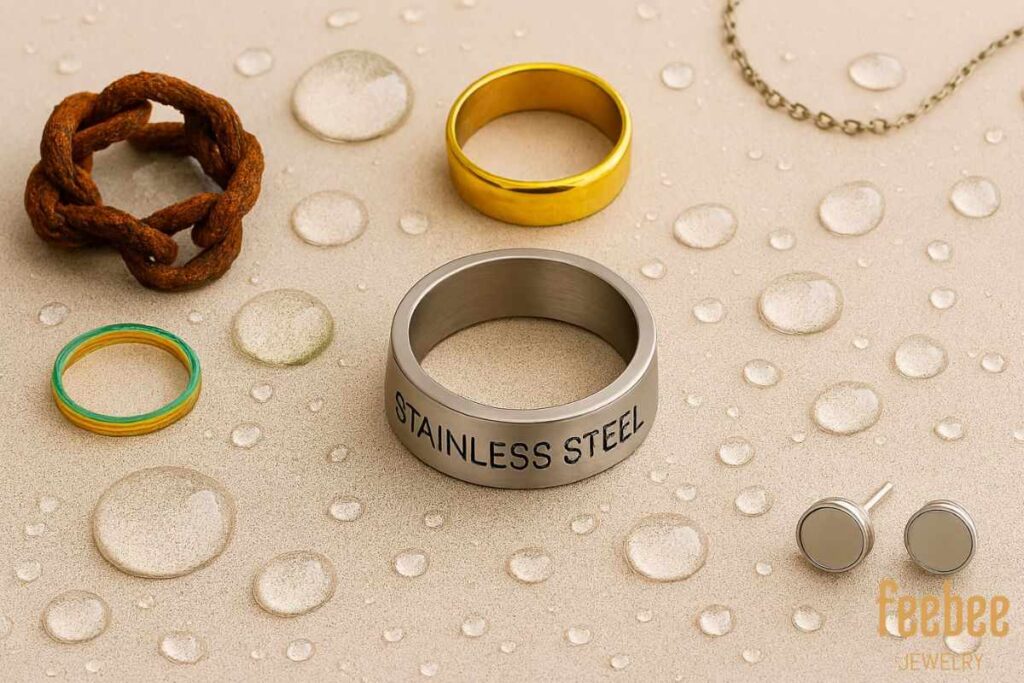
Stainless steel jewelry is the kind of jewelry that a lot of people tend to overlook until they wear it. It gets a bad rap, and we are here to set the record straight. Here are a few misconceptions about stainless steel jewelry and the truths behind these misconceptions.
It is cheap.
Yes, stainless steel jewelry is affordable, but the word cheap implies that it’s of bad quality or flimsy, and good stainless steel jewelry is the complete opposite. When it’s made the right way – With higher grade stainless steel like 316L, it is durable and built to last. You can think of it as a white T-shirt. It might be simple, but it is timeless when the material and the fit are solid.
It turns your skin green.
This is only the case when the stainless steel mix is off or the plating or coating is of a low grade. High-quality stainless steel jewelry (like 316L) is nickel-safe and usually not an issue for those who have sensitive skin. If you want to know mor,e you can read: Does stainless steel turn skin green?
You can’t plate or engrave it.
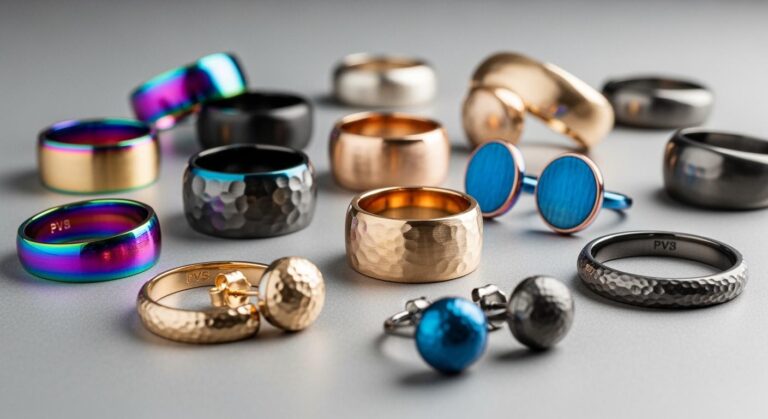
Yes, you can. You just need the right tools. PVD plating holds color beautifully, and laser engraving gives you clean and permanent results. It is not impossible; it is just technical.
It’s only for men
This is so outdated. Stainless steel makes its appearance in everything from delicate rings to dainty chains. Because it is so durable, it is perfect for delicate pieces, as you don’t have to worry about it bending, losing its shape, or tarnishing after just one wear. It’s the perfect metal for men’s and women’s jewelry.
It’s not valuable
This all depends on your definition of value. If you’re looking for jewelry that won’t rust or tarnish and will last, stainless steel jewelry delivers. It is also low-maintenance and
high-impact, and for a lot of people, this is worth more than a high price tag.
How to Keep Stainless Steel Jewelry Looking Its Best?
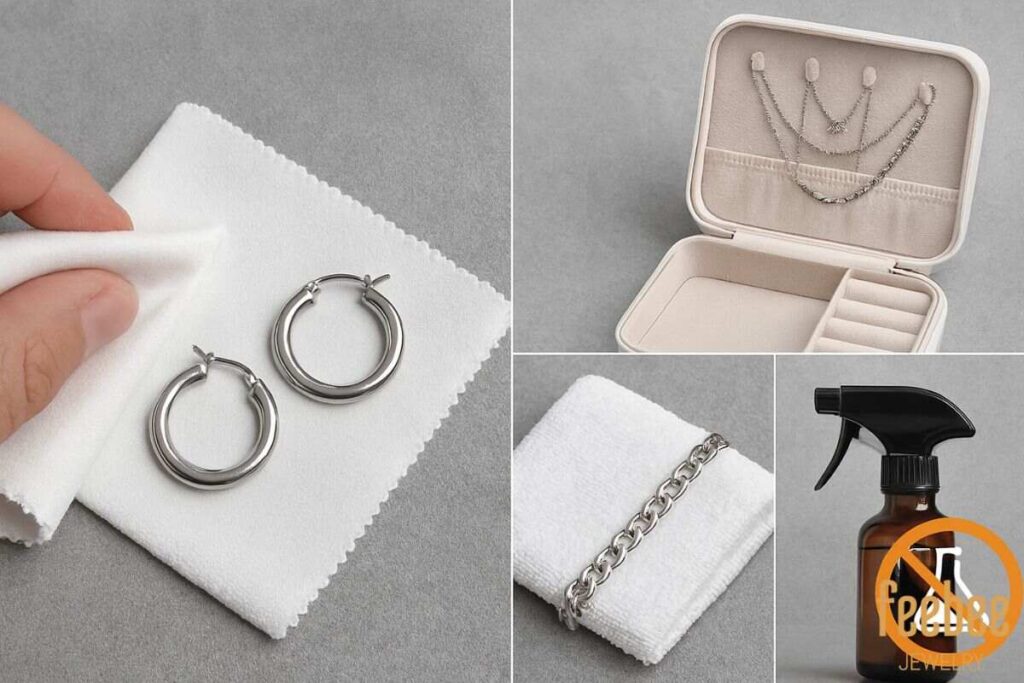
Stainless steel is low-maintenance when compared to other metals, but if you put a regular maintenance plan in place, you can enjoy your pieces for much longer. Here are a few tips to suggest to customers to help them keep their stainless steel jewelry looking its best.
Clean regularly
Stainless steel jewelry is tarnish-resistant, but that doesn’t mean it is immune to things like sweat, oils, and build up. After a long day at work, running errands, or going to the gym, just give it a quick wipe down with a microfiber cloth and, now and again, a quick cleaning.
All you have to do is gently rinse it with lukewarm water in a bowl and a few droplets of mild dish soap. If you want more detailed step-by-step instructions, you can read how to clean your stainless steel jewelry.
Store with intention
Store away your stainless steel jewelry pieces properly and don’t mix metals. Yes, stainless steel is durable, but it can scratch softer metals, or it can get surface scuffs if you store it roughly. Store your pieces in a soft pouch or a jewelry box with compartments that separate the jewelry. Also, avoid using containers that are airtight, as they can trap moisture.
Keep it dry – always
Stainless steel is tarnish-resistant, but when it is trapped in moisture, it can cause buildup to form and cloudiness. Make sure to pat it dry before you store it away, and especially focus on the clasps and the overlooked spaces.
Avoid contact with chemicals
Stay away from chlorine, bleach, or harsh detergents when wearing your stainless steel jewelry. These chemicals can react with the alloys in your stainless steel and dull them over time. It is safer to remove your pieces before showering, going for a swim, or when you know you’re going to work with strong cleaning products.
FAQs
Is Stainless Steel Good Jewelry?
What is stainless steel jewelry? Is Stainless steel jewelry good? Without any doubt! It might not be luxurious like silver or gold, but you can rely on it. It won’t tarnish, but it will smudge. Wear it, wipe it, and keep going. It’s not trying to be an heirloom—but it will last you like one.
Can I Shower With Stainless Steel Jewelry?
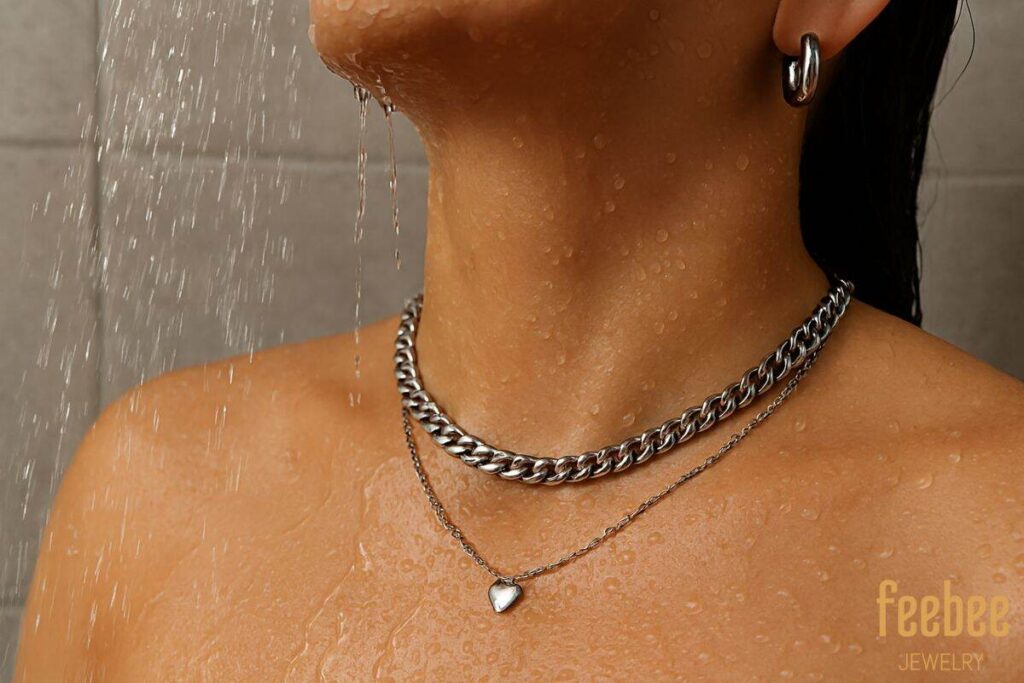
Yes, you can shower with stainless steel jewelry. It won’t rust or tarnish on you. But all of the soap and shampoos can lead to build-up and your piece becoming dull over time. So you can either take it off before showering to save you some time, or make sure to rinse it and give it a wipe down, and ensure it is dry after you shower.
What Are The Disadvantages of Stainless Steel?
Although stainless steel jewelry has many advantages, there are a few downfalls. It’s heavier than other metals, it’s hard to resize or repair, and it doesn’t appreciate over time. These are just a few things to keep in mind. If you want to know more, read “Pros and Cons of Stainless Steel Jewelry.
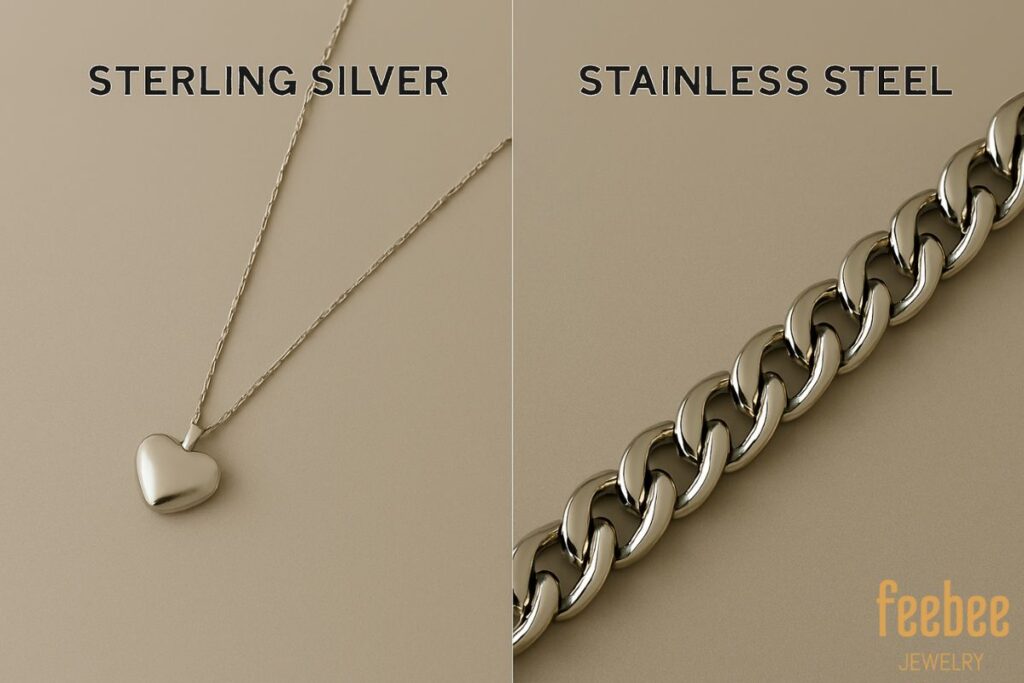
Which Is Better, Sterling Silver or Stainless Steel Jewelry?
It all depends on what you or your customer is looking for. Are you looking for classic beauty or practicality? Each of these metals brings something different to the dressing table.
Sterling silver offers timeless elegance, but it is also softer and prone to tarnishing, and needs regular upkeep. Stainless steel, on the other hand, is durable, low-maintenance, and the high-grade stuff, like 316L, is hypoallergenic. This makes it perfect for everyday wear.
Final Thoughts
What is stainless steel jewelry? It is a blend of elemental metals where each of the metals is chosen for its resilience and beauty. Sometimes it is plated, sometimes it’s not. It is made for everyday wear without worrying about it losing its shine or breaking on you.
It won’t tarnish, it won’t rust, and it won’t ask for much. Just the basics: a wipe here, a dry jewelry box there. When you give it a little care, it’ll love you back for years and years to come.
Are you looking for something special to add to your collection? We’ve spent years inside this world. Not just learning it, but feeling it. Jewelry isn’t just what we do. It’s how we see. We at Feebee Jewelry can help you find the pieces that feel right, not only for your brand but for your customers, too. Let’s find what fits, and make sure it shines.

Perry Xu