Does Stainless Steel Turn Skin Green?
ByPerry Xu
Have you ever bought the cutest ring or bracelet and worn it for the day, only to realize the next day that it had turned your finger or wrist green? We all have been there. It is, unfortunately, a common worry with cheaper metals. But, does stainless steel turn skin green?
Well, most of the time, no. Stainless steel is durable, it doesn’t rust easily, and it is usually gentle on your skin. That said, not all stainless steel jewelry is created equally. Things like the metal’s quality, coatings, and even your skin type can make all the difference.
In today’s article, we break down what causes these annoying green stains, how stainless steel compares to other metals, and how you can prevent the discoloration from happening. So if you’re tired of jewelry that turns on you, stainless steel won’t leave you green with regret.
Contents
- 1 The Link Between Jewelry and Skin Staining
- 2 What Other Metals Can Turn Skin Green—and Why?
- 3 Does Stainless Steel Turn Skin Green Compared to Other Metals?
- 4 Why Stainless Steel Won’t Leave a Green Mark?
- 5 The Composition of Stainless Steel Jewelry
- 6 Stainless Steel Jewelry: What Can Trigger Skin Discoloration?
- 7 How to Prevent Green Discoloration From Jewelry?
- 8 FAQs
- 9 Final Thoughts
The Link Between Jewelry and Skin Staining
Before we get into the finer details of “does stainless steel turn skin green,” and what makes it different, it’s important that we first look at what causes skin to turn green from jewelry. Let’s have a look.
Why Does Jewelry Turn Skin Green?
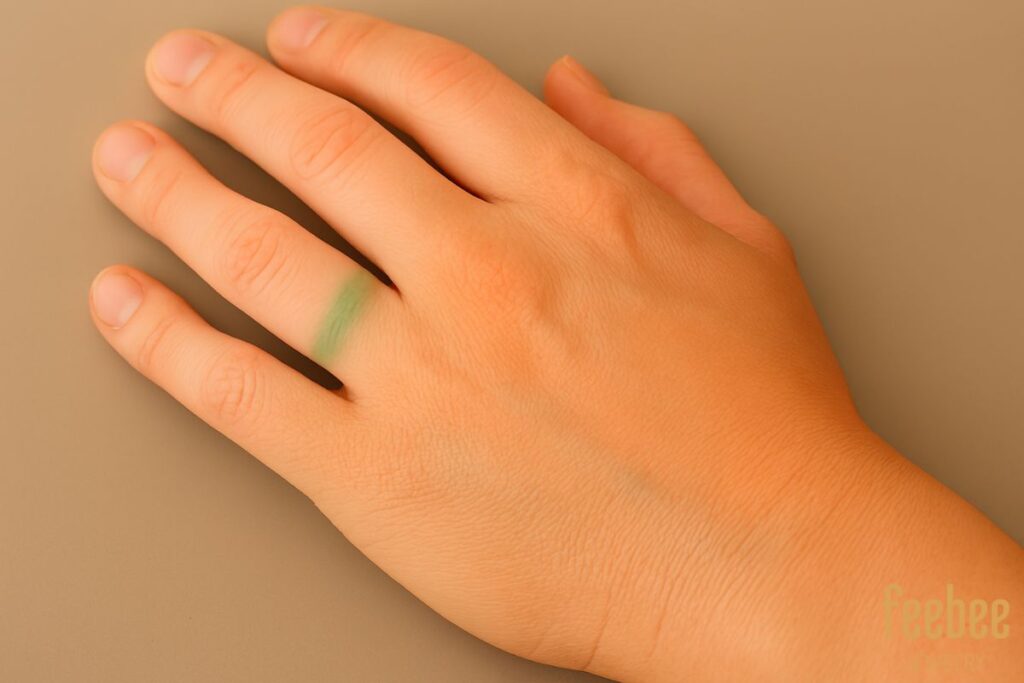
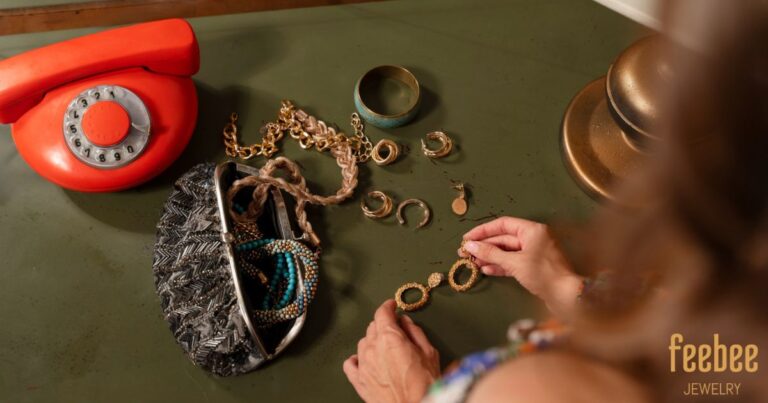
The green stain that you are left with after wearing one of your favorite jewelry pieces is usually caused when a chemical reaction takes place. It happens when the metals in the jewelry oxidize and then mix with the acids from your sweat or other products you have on your skin. This reaction is what leads to the green discoloration.
Copper is the most common culprit. When it reacts with moisture, for example, with the lotion you put on, the humidity, or even your sweat, it forms copper salts, like copper chloride or copper carbonate.
These salts are green in color and can rub off onto your skin, which then leaves behind that annoying, noticeable stain. You can think of this process in the same way as copper roofs turning green or even statues turning green over time. With jewelry, it’s just faster and, of course, closer to your skin.
What Other Metals Can Turn Skin Green—and Why?
There are many common jewelry metals that contain copper and are known to cause the green discoloration: Let’s take a look
- Sterling silver can sometimes include a small amount of copper.
- Brass, which is an alloy of copper and zinc.
- Bronze, which is also an alloy of copper and tin.
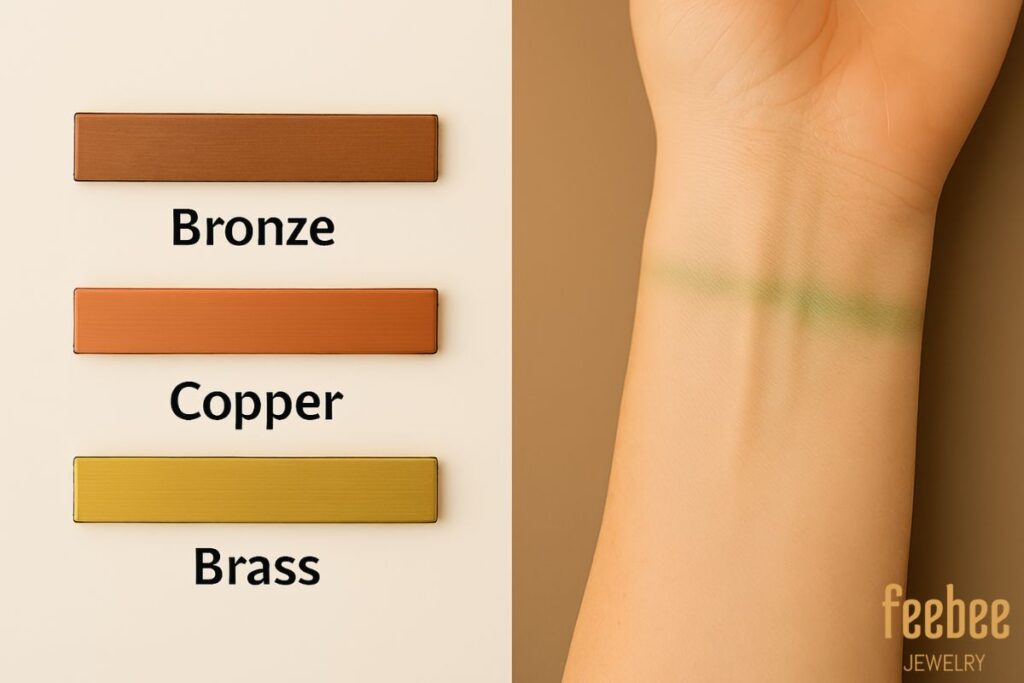
Below you will find a table that breaks down which metals are most likely to make your skin turn green, why it happens, and how stainless steel compares:
| Metal Type | Green Skin Risk | Why It Happens | Stainless Steel Comparison |
| Copper | High | It reacts with your sweat to form copper salts. | Stainless steel rarely contains any copper. |
| Brass | High | It is an alloy of copper and zinc. It oxidizes easily. | Stainless steel is much more stable. |
| Bronze | High | It is mostly copper, and it tarnishes easily. | Stainless steel is tarnish-resistant. |
| Sterling Silver | Moderate | It may contain copper and will tarnish over time. | Stainless steel is tarnish-resistant. |
| Low-Grade Stainless Steel | Low to Moderate | It is possible to contain nickel or mixed alloys. | High-grade stainless steel is the safer option. |
| 316L-Stainless Steel | Very Low | It is not only hypoallergenic, but it is also corrosion-resistant. | Perfect if you have sensitive skin. |
Does Stainless Steel Turn Skin Green Compared to Other Metals?
In most cases, no. The green reaction is common to happen with metals like brass, bronze, and even some silver alloys that contain copper. These metals oxidize easily, and unfortunately, your skin is there to pay the price.
Stainless steel jewelry is different. Especially if we’re looking at the high-grade kind, like 316L. It is made without copper and is designed to resist corrosion. Stainless steel is stable, non-reactive, and usually won’t leave any discoloration behind. That’s why stainless steel jewelry is often recommended for people with sensitive skin or anyone who’s had issues with some costume jewelry in the past.
But it is important to keep in mind that not all stainless steel jewelry is made equally. There are cheaper quality mixes that may contain nickel, and this is what can cause irritation or discoloration to those who have sensitive skin.
If your customers have had reactions to costume jewelry before, it is important for them to look at the metal composition before they buy the stainless steel ring or bracelet they have been eyeing.
When we compare stainless steel jewelry to copper-based metals, it is not only a safer option, but a skin-friendly one too.
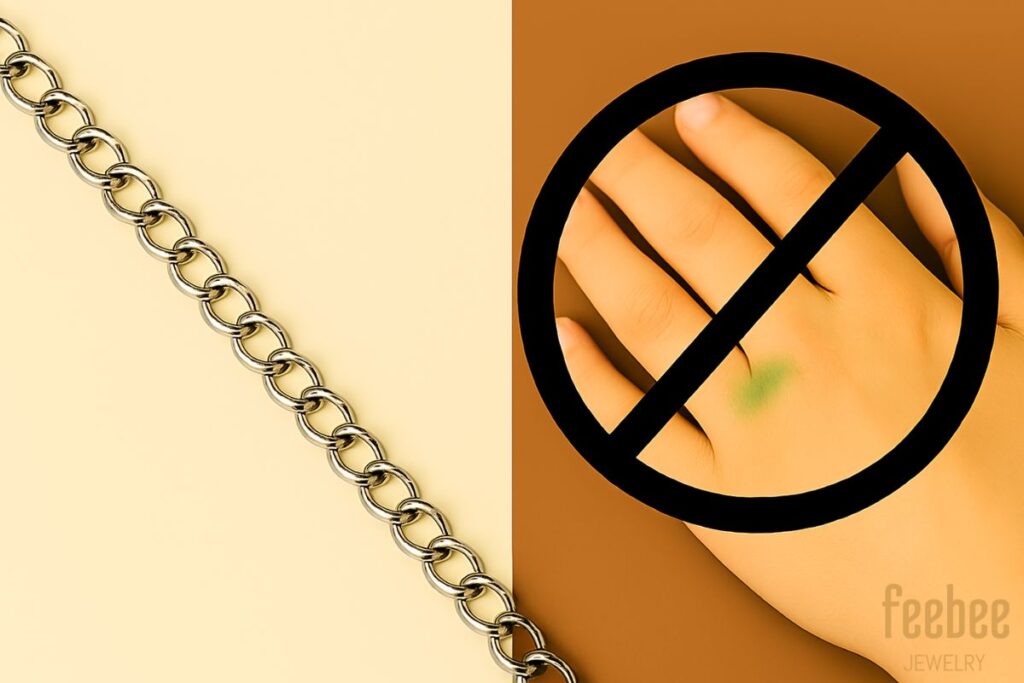
Why Stainless Steel Won’t Leave a Green Mark?
Some metals start strong, then fall apart, flaking, fading, or changing color, the moment when life starts to get messy. Stainless steel is different because it’s the kind of material that not only shows up, but it stays.
Your customers can wear their stainless steel jewelry through a workout, a shower, a heatwave, and it won’t rust or lose its shine. The high-grade stuff (like 316L) doesn’t just resist corrosion, it ignores it. No tarnish. No weird reactions. Just clean, solid metal that doesn’t need you to babysit it.
If you’ve ever had jewelry that looked great for a week and then turned green on you, stainless steel jewelry will feel like a relief. Is Stainless steel jewelry good? Oh, you bet it is! It’s not trying to be precious, it’s trying to last. And it does.
The Composition of Stainless Steel Jewelry
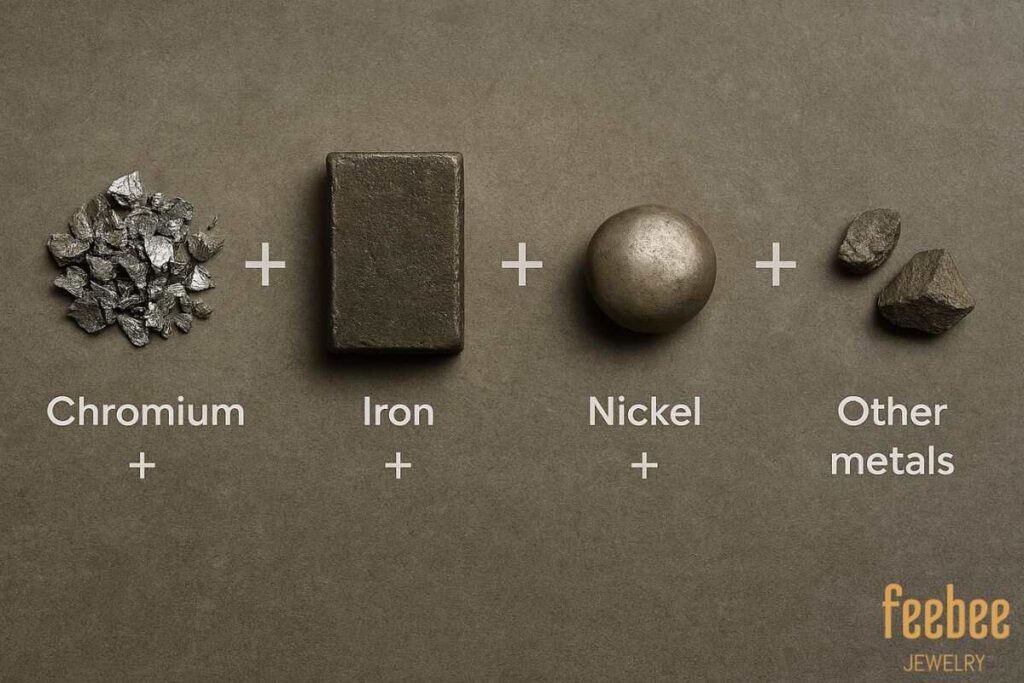
Stainless steel jewelry isn’t just one thing; it’s a mix. Iron makes up the majority of this mixture, but it’s the chromium that changes the game. Once chromium is hit with oxygen, it forms a thin layer that blocks rust before it even starts. You don’t see it. You don’t feel it. But it’s there, doing the work.
Higher-grade stainless steel jewelry, like 316L, adds molybdenum. This helps when sweat, salt, or humidity get involved. Nickel’s often added in the mix too, but it’s mostly for shine and smoothness; hypoallergenic blends keep it on the low.
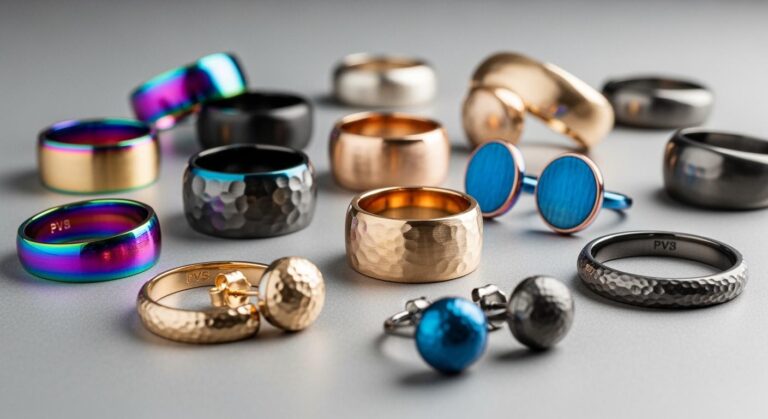
And yes, some pieces are plated with gold finishes or black coatings, but the core stays stable. That’s the part that matters. It’s not just about how your stainless steel jewelry looks out of the box. It’s about how it holds up when your customers actually wear it.
Stainless Steel Jewelry: What Can Trigger Skin Discoloration?
We love stainless steel jewelry because of how low-maintenance it is and because it doesn’t tarnish. But unfortunately, that doesn’t mean that it never changes. Depending on the mixture of your stainless steel jewelry, its finish, and how your customers wear it, it can react.
Things like the lotions your customers wear, their sweat, and even their skin’s chemistry can also play a role. And yes, sometimes it turns skin green. It doesn’t happen a lot, but it happens. It is usually when the steel is blended with cheaper metals or when the coating comes off.
It’s not a defect, but it is something to keep in mind when you’re creating your stainless steel jewelry collection. Let’s have a look at the factors that can affect your stainless steel jewelry.
Quality of the Stainless Steel
Some stainless steel holds up well, and some of them don’t. It all depends on the mix. 316L is solid, it resists rust, it doesn’t irritate your skin, and it stays smooth. The cheaper blends might look totally fine at first, but then start to react over time. You won’t always know if the piece will react to your skin or not until you wear it. Make sure to always make quality a priority.
Plating or Coatings
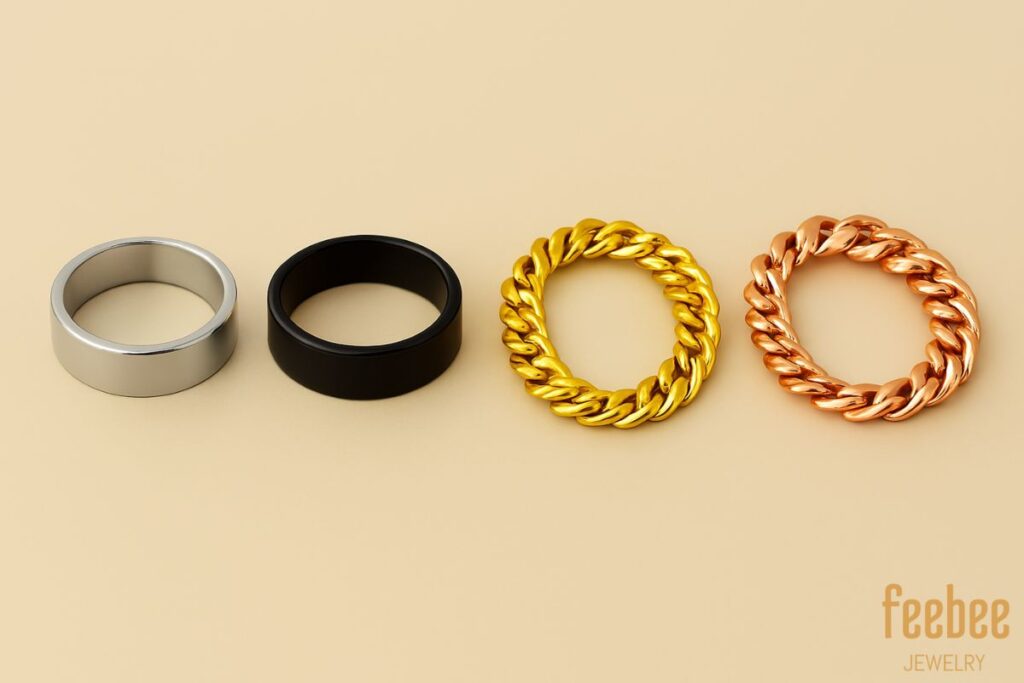
The gold-plated, black PVD, or other coatings may change the look of the stainless steel jewelry, but it doesn’t change the metal that’s underneath. If the plating or coating wears off, the base will show through. And this means that your skin will now make contact with the base. If it contains nickel or copper, it is possible for it to react with your skin and leave a green tint.
It’s normal wear, and not a sign of poor quality, just chemistry doing its thing.
Environmental Factors
Things like the lotions you apply, your sweat, and even the pH of your skin all have an effect. Stainless steel is tough, but it’s not immune. So, if your customers wear their stainless steel jewelry to the gym or in the shower, suggest that they go for a better grade. It will handle the wear without turning dull or weird.
How to Prevent Green Discoloration From Jewelry?
When customers’ skin turns green from jewelry, they usually assume it’s because the jewelry is poor quality. And well in some cases, it is the case, it is usually about what the metal is made up of, when moisture comes into play, and how they wear it. Here are some tips on how to avoid the annoying green tint:
- Choose 316L stainless steel. This grade is made with nickel-safe stainless steel, so it is less likely to cause any allergic reactions.
- Look for mixed metals. Even the smallest copper accent or nickel clasp can trigger a reaction. So encourage your customers to look at the labels.
- Understand plating. It is normal for gold or black finishes to wear down over time. And once the base metal is exposed, it is more likely for the skin to react. So keep this in mind when deciding on coatings or not.
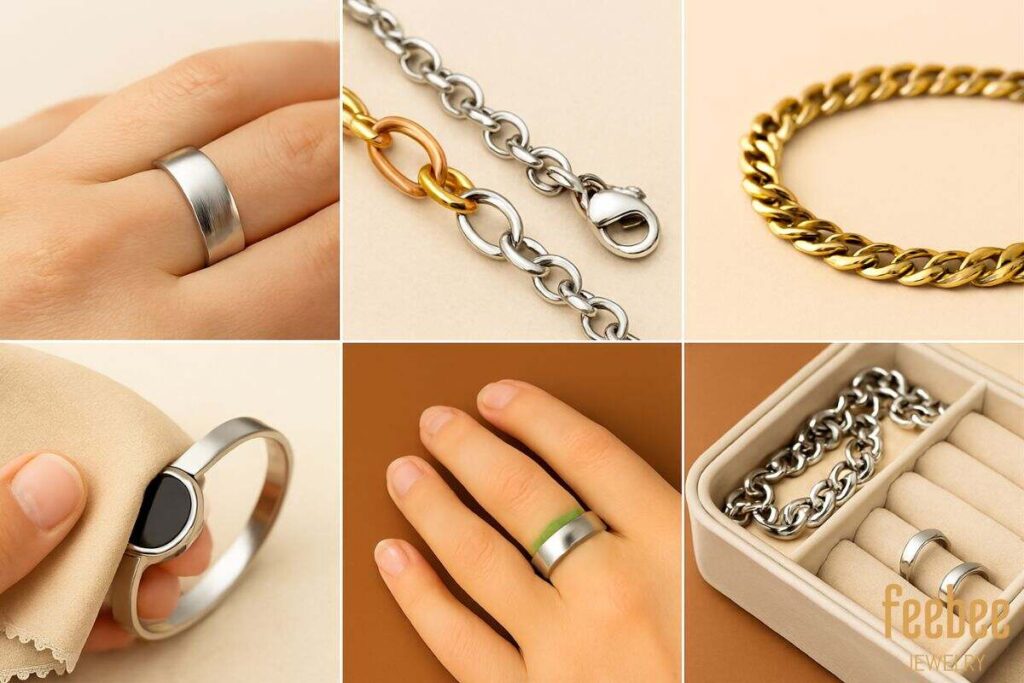
- Wipe pieces after wear. Giving your stainless steel jewelry a quick clean after wearing it will remove the sweat and oils that lead to it becoming dull over time. Knowing how to clean your stainless steel jewelry is a game-changer.
- Test with short wear. Suggest that customers wear their custom stainless steel jewelry for a few hours first at home to check if they have any reactions before they wear it out.
- Store jewelry in a dry place. Humidity will accelerate oxidation. So make sure to suggest to customers to store their stainless steel jewelry in a soft pouch or box that has compartments instead of leaving it on the bathroom counter.
FAQs
What Metals Don’t Turn Your Skin Green?
Metals that contain little to no copper, for example, 316 L, solid gold, platinum, or sterling silver, usually won’t turn your skin green. These metals stay stable on your skin. It helps to be transparent and let customers know what’s in the mix and suggest that they first test their pieces out for a few hours before they decide to wear it for an entire day.
Does Stainless Steel Leave Green Skin?
Does stainless steel turn skin green? No, stainless steel usually doesn’t leave your skin green. The higher-grade stainless steel doesn’t contain copper, and this is usually the culprit for that green stain. But not all stainless steel jewelry is created the same, and some cheaper blends might include metals that may irritate your skin. You don’t need to overpromise. Just tell your customers to wear it for a few hours first. That way, they’ll know how their skin reacts before wearing it all day.
Is Stainless Steel Safe to Wear on Skin?
Yes, stainless steel is safe to wear on the skin if you’re using the right grade. 316L or 304? Then it’s all good. But if nickel sneaks in, expect complaints. Pieces that are worn every day need to be hypoallergenic, there’s no exception.
So test your plating and include high-grade stainless steel in your jewelry. Customers won’t care about specs, but they will care if their wrist flares up. Keep it clean, label it right, and you’ll avoid any drama.
Can I Wear Stainless Steel in The Shower?
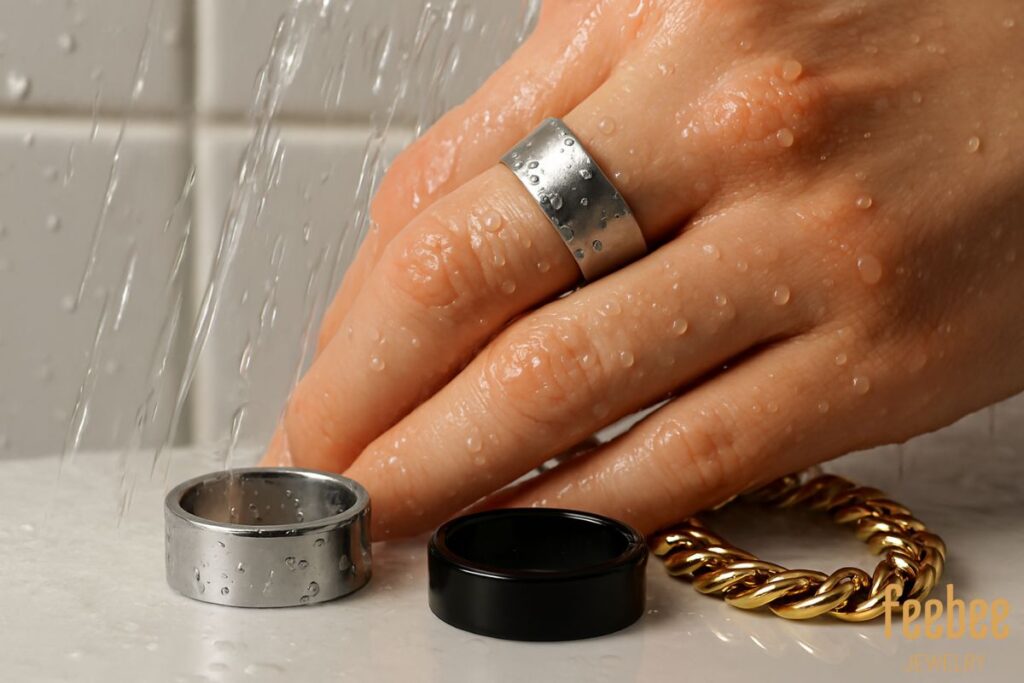
Yes, you can wear stainless steel in the shower, especially if it’s solid 316L or 304. The water is fine, but the soaps and heat can mess with the plating over time. If you’re adding finishes or mixing metals, make sure to test how they hold up. It is also important to tell your customers to take it off before they shower or swim. It will help the stainless steel jewelry stay shiny, and you don’t have to worry about how long it will last you.
Final Thoughts
Does stainless steel turn skin green? No, not if you are using the right grade. 316L stays smooth, it doesn’t rust, and won’t leave a mark on your fingers, wrists, or anywhere else. But the cheaper blends or mystery mixes are where things get tricky.
If you’re adding finishes or mixing metals, a little testing goes a long way. Make sure to clearly label and keep your designs thoughtful. This will keep your pieces skin-friendly and your reputation solid.
Do you have any questions or need help choosing the right pieces for your jewelry line? Feebee Jewelry is here to help. After years of working closely with customers, we’ve learned what they reach for, what they trust, and what they come back for.
So whether you’re refining your collection or starting fresh, we’re here to help you create something beautiful. Let’s make your next collection shine… without turning green.

Perry Xu