Stainless Steel vs Sterling Silver: A Detailed Comparison
ByPerry Xu
Do you want to start a jewelry business but are getting confused whether stainless steel or sterling silver is better for your line? Regardless if you are a retailer, wholesaler, or a brand owner, keep in mind the metal you choose will make all the difference about your customers satisfaction.
This is the reason why we are going to provide a detailed comparison of stainless steel vs sterling silver. So that you can make a well informed decision that best suits your business requirements. So read further!
Contents
What is stainless steel?
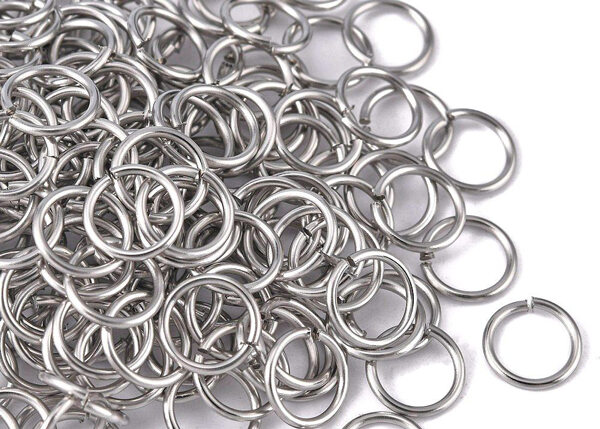
Stainless steel is an alloy of iron, carbon and 10.5 percent of chromium. Chromium, although used in small amounts, enhances stainless steel’s strength, temperature resistance, and of course, most importantly, makes the material corrosion resistant.
Pros of Stainless Steel
- Does not scratch or get damaged easily.
- Does not require polishing.
- Inexpensive option and causes less skin irritation.
Cons of Stainless Steel
- Heavier and bulkier than silver.
- Difficult to change or repair.
- Has no monetary prestige.
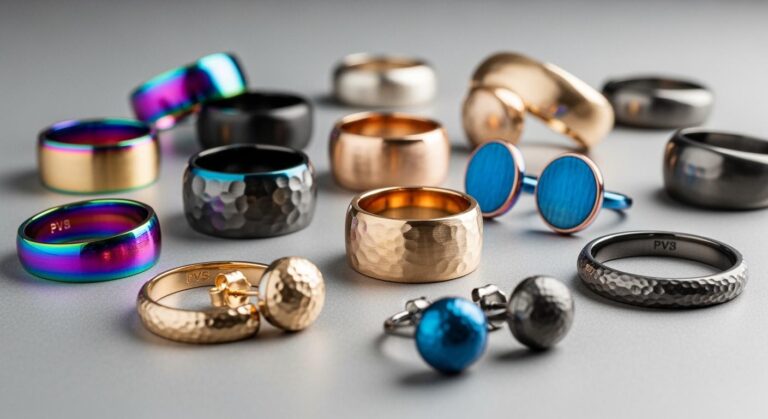
Source: Pinterest
Common Stainless Steel Grades Used in Jewelry
| Main Elements | Key properties | Common Jewelry Uses | |
| 304 | Fe, Cr (18–20%), Ni (8–10.5%) | Good corrosion resistance, affordable | Earrings, necklaces, general fashion jewelry |
| 316L | Fe, Cr (16–18%), Ni (10–14%), Mo (2–3%) | Surgical-grade, hypoallergenic, highly durable | Body jewelry, watches, rings, and custom-engraved items |
| 201 | Fe, Cr (16–18%), Mn (5.5–7.5%), Ni (3.5–5.5%) | Lower cost, decent strength, and less corrosion resistance | Budget jewelry, fashion accessories |
| 430 | Fe, Cr (16–18%) | Nickel-free, magnetic, and less corrosion resistant | Basic accessories, budget custom jewelry |
What Is Sterling Silver?
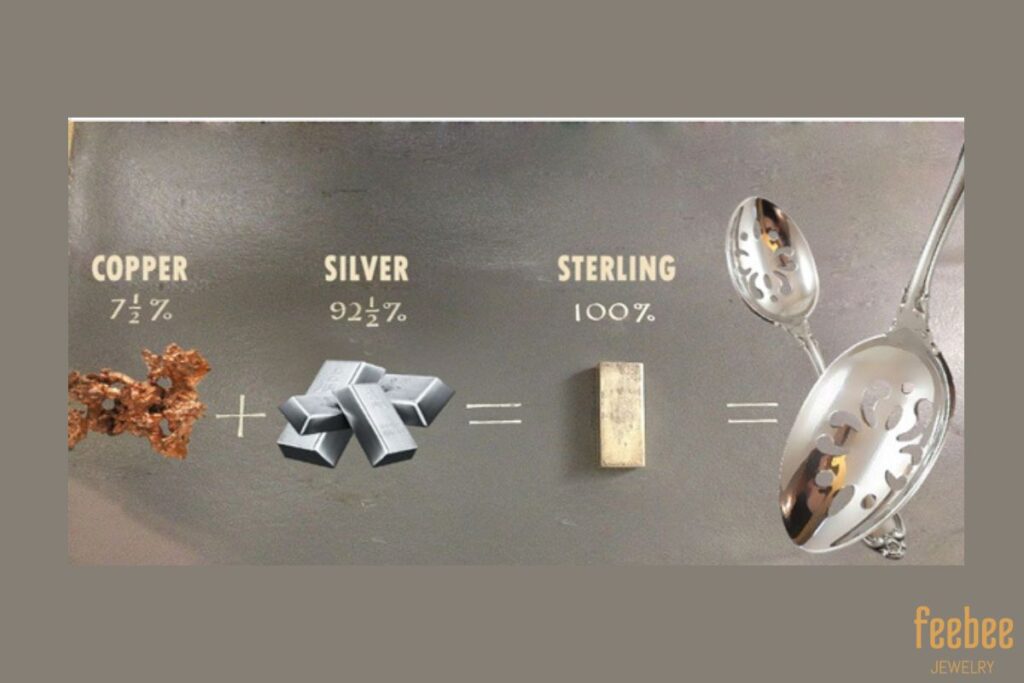
Let’s now focus on Sterling silver, a precious metal alloy consisting of 92.5% pure silver and 7.5% other elements, mostly copper. This blend is advantageous because pure silver alone is too soft to easily cause wear and tear.
Thus, adding other metals even in small amounts enhances the strength of silver. You may also come across the term “925 silver”. This is sterling silver’s other name because 925 denotes the sterling silver’s 92.5% silver content.
Pros of Sterling Silver
- Simple to repair.
- Comfortable to wear.
- Excellent fine-work and intricate name designs.
- Shiny gleaming, luxurious appeal, which serves to set Silver apart.
Cons of Sterling Silver
- Higher cost than steel.
- Requires polishing maintenance regularly.
- Affected easily with substances and with water.
- Susceptible to surface scratches, bending, and other forms of damage.
On Quora, different people have shared their views about choosing stainless steel or sterling silver. A person named David Forbes has said that in case of any hand injury, if you’re wearing a sterling silver ring, then being softer, it can easily be cut off. However, in the case of stainless steel, it would become harder to cut off.
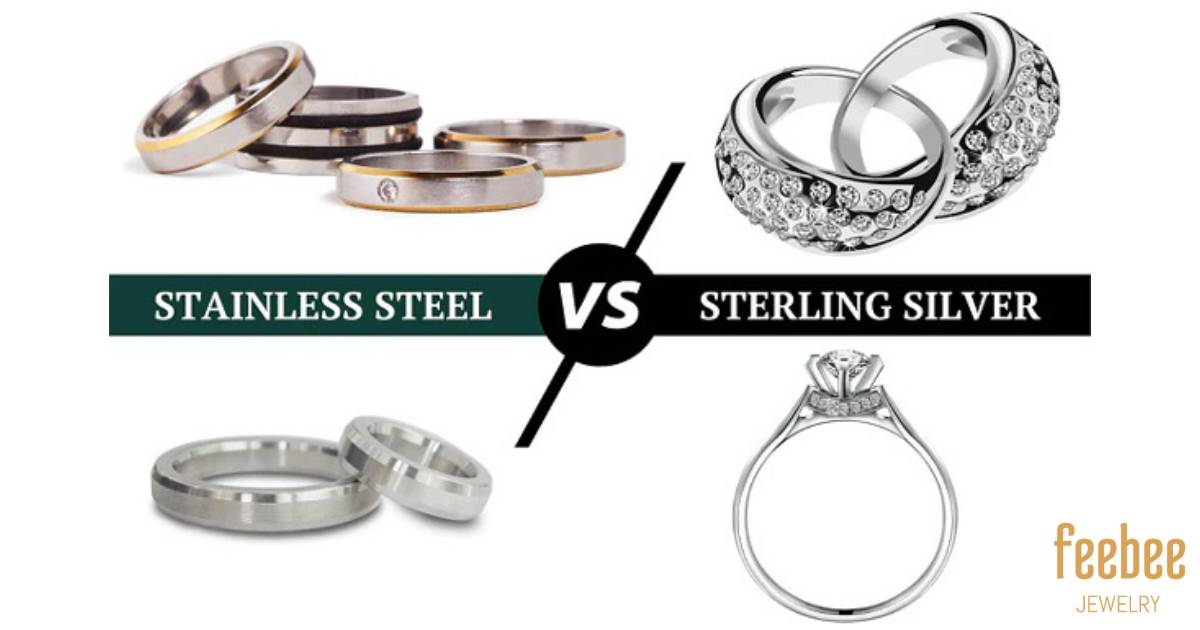
Difference Between Stainless Steel and Sterling Silver
Now, after the above overview of sterling silver and stainless steel, you may be wondering if both are used for jewelry, then what the distinguishing factor is. How do we determine which one is better?
Stay calm! To assist you, let’s highlight the most important features of both materials.
Durability
Stainless Steel: As discussed earlier, stainless steel is an alloy of iron, carbon, and chromium. The mix of the three elements results in a dense crystal structure which gives high tensile strength.
In this respect, stainless steel jewelry is able to withstand the dings and scratches that you would encounter on a daily basis. Also, this type of metal is great for people who wear jewelry every time like while working, taking showers and so on.
Sterling Silver: On the other hand, sterling silver’s composition is 92.5 percent silver which is a soft metal. Even though it has a small percentage of copper for added strength, abundance of soft silver makes it very easily scratched or dented.
Thus, unfortunately sterling silver is not very ideal for rings, bangles, and other mobile jewelry as it can easily get scratched.
Tarnish Resistance
Stainless Steel: Stainless steel has 10.5% chromium which you might remember as discussed in the previous section.
Therefore, when stainless steel is exposed to air, chromium metal oxides (gains oxygen from the air) undergoes oxidation. This forms chromium oxide which now protects stainless steel from corrosion due to air and water.
Sterling Silver: Conversely, when sterling silver is exposed to air and moisture, it quickly then reacts with sulfur present in them to form silver sulfide which is a black compound. Hence the silver gets black or grey. This is why silver jewelry needs polishing so often to get rid of tarnish and regain the shiny form.
Hypoallergenic
Hypoallergenic is used for something that is less likely to trigger allergic reactions. So, talking about metals, do remember all types of metal alloys that have nickel are irritating for skin.
However, keep in mind that just nickel present doesn’t truly mean that the metal can cause allergies. But the important factor is how much nickel would have to be shed from the metal in question to be exposed to skin.
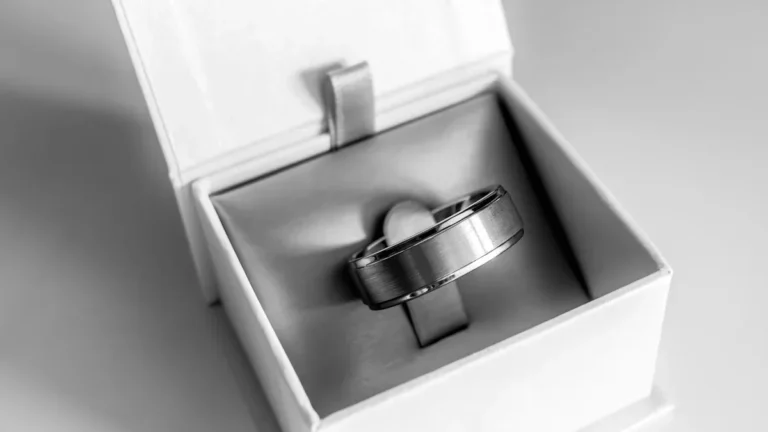
Source: Pinterest
Stainless Steel: Every grade type of stainless steel contains nickel, making them prone to allergic reactions. Nevertheless, 316L stainless steel is known as surgical grade.
Here, 316L (which means low carbon) has special traits as it reduces carbon impurities and also locks the nickel, thus preventing it from leaching out and touching your skin.
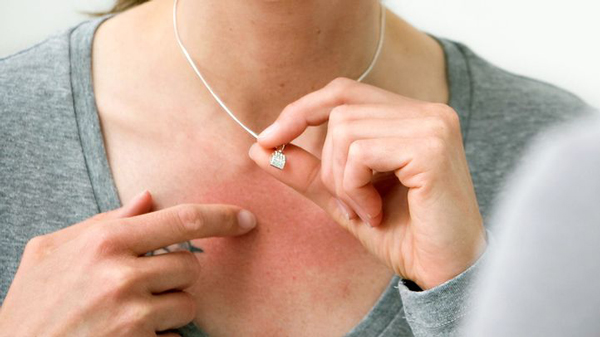
Sterling Silver: On the other hand, sterling silver is not hypoallergenic. Therefore, people who have sensitive skin are advised not to wear sterling silver jewelry as it would lead to discomfort, skin rash, and swelling.
Aesthetic and Shine
Stainless Steel: You might have noticed, the color of stainless steel is a cool, silvery gray. However, its hardness creates a problem in terms of shine. This is because harder surfaces reflect light more diffusely, resulting in a low shine surface.
Sterling Silver: Sterling silver, unlike other metals, appears a shiner and brighter because of its 92 percent silver content . Thus, silver being softer can reflect light in a straight line leading to mirror-like shine in jewelry.
Customization and Engraving
Source: Pinterest
Stainless Steel: Engraving and laser marking on stainless steel is simple because of the material toughness.However, this hardness makes resizing stainless steel jewelry increasingly difficult.
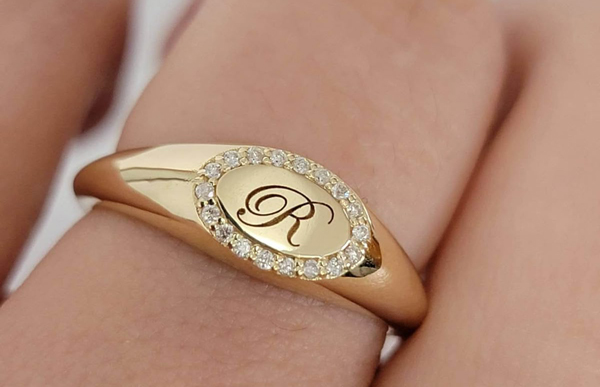
Sterling Silver: The soft and malleable nature of sterling silver allows for easy customization, be it resizing, engraving or otherwise. As a result, extremely detailed designs can be made with sterling silver, which can undergo intricate modifications.
Maintenance and Care
Stainless Steel: The jewelry made of stainless steel can be washed with mild soap and the shine will be regained.
Sterling Silver: Unlike stainless steel, sterling silver requires more effort to maintain. For instance, you should use a soft dry cloth. Further, to reduce tarnishing, it must be stored in anti-tarnish bags or kept in air-tight containers. Thus, without proper care, sterling silver will tarnish over time and form a black oxide which causes it to lose its luster.
Affordability and Value
Stainless steel: Stainless steel jewelry tends to be more affordable because its raw materials are more abundant, and it requires less expensive processes to manufacture.
Sterling silver: Unlike stainless steel, sterling silver jewelry becomes the most expensive purchase because silver is considered a luxury metal.
Summarizing table stainless steel vs sterling silver:
| Stainless Steel | Sterling Silver | Winner | |
| Durability | ✅ Highly durable | ❌ Softer, prone to scratches | Stainless Steel |
| Tarnish Resistance | ✅ Doesn’t tarnish | ❌ Needs regular polishing | Stainless Steel |
| Hypoallergenic | ✅ Especially 316L (low nickel) | ✅ If high-quality (nickel-free) | Tie |
| Shine & Aesthetics | ✅ Modern, cool-toned shine | ✅ Classic, warm-toned, bright shine | Sterling Silver |
| Customization | ✅ Laser engraving, sleek cuts | ✅ Soft, easy for detailed work | Sterling Silver |
| Maintenance | ✅ Very low upkeep | ❌ Needs careful handling | Stainless Steel |
| Cost | ✅ Budget-friendly | ❌ More expensive | Stainless Steel |
| Uses | Casual wear, men’s jewelry, piercings, minimalist rings | Luxury pieces, heirloom rings, artisan jewelry | Depends on use |
Tips for Choosing Between Stainless Steel and Sterling Silver
Now you are familiar with the properties of both stainless steel or sterling silver jewelry. But the final decision of deciding between both depends on your priorities. So, here are some tips helping you better decide which best suits your needs!
Consider Your Lifestyle: If you have an active lifestyle like you travel more often, then definitely you want a jewelry with low maintenance or durable enough to withstand different environments. So, yes stainless steel jewelry because of its scratch or tarnish resistance ability would be the most practical choice.
Think About the Occasion: Furthermore, if you want to wear jewlery on any special occasion, then opting for sterling silver is the best choice. Because of its shine or classic style it never goes out of fashion and attracts the attention of others.
Check for Allergies: Similarly, if you have a very sensitive skin then before choosing any jewlry. You have to pause and think about metal’s composition especially for earrings, necklaces or bracelets.
That’s why it’s best to choose 316L stainless steel as it’s hypoallergenic compared to sterling silver.
Think About Weight: Moreover, if you are choosing jewery for everyday wear, then your comfortness matters a lot. So, definitely you’ll opt for one which is light weight like stainless steel compared to sterling silver ( feels heavier).
Consider Your Budget: Besides all, if you want stylish jewelry at affordable prices, then stainless steel would be the best choice. On the other hand, if you want some classic premium jewelry, then opt for the sterling silver.
FAQs
i) Is stainless steel better than sterling silver?
It depends on your specific needs. If you want something strong, affordable, and easy to take care of, then stainless steel will work better for you. But if you’d rather something shinier and more classic, then you may prefer sterling silver.
ii) Is stainless steel jewelry good?
Of course, stainless steel jewelry is the most economical and long-lasting choice. Feel free to wear it daily, to the gym, or even in the shower – there’s no need to take it off.
iii) Is stainless steel safe for skin?
Absolutely yes, particularly the 316L type is safe for your skin. Its L grade processing traps the nickel within the metal structure, thus it wouldn’t release it to cause skin irritation.
iv) Can I wear stainless steel in the shower?
Absolutely yes, you can take a shower while wearing the stainless steel jewelry. This is because it’s resistant to rust or corrosion, so it doesn’t fade or lose quality even when exposed to water. However, you should avoid using harsh soaps, shampoos or cleaning chemicals as they may dull its shine with time.
Final Words:
From the discussion above on stainless steel vs sterling silver, the summary is that each material has varying advantages. Thus your decision can depend on personal requirements. For example, if the goal is to acquire jewelry that is cheap and can withstand daily use, then stainless steel works perfectly.
But if your preference is for timeless jewelry with sophistication, then you will find sterling silver perfectly suitable.
For those who are searching for custom stainless steel jewelry suppliers, we invite you to contact Feebee Jewelry, as we have over a decade of experience in this particular industry. With a collection of over 3000 pieces, we strive to offer exquisite, non-irritating, and durable jewelry. So, contact us today!

Perry Xu