Gold Filled vs Gold Plated Jewelry: Differences and Care Tip
ByPerry Xu
Gold filled vs gold plated jewelry is one of the most common comparisons made when gold jewelry becomes the talk of the town.
These terms are important to know if you are digging into the gold world, as they indicate the amount of actual gold in a piece, as well as its quality and longevity.
More affordable alternatives presently include gold-plated and gold-filled jewelry, which can strikingly offer the same golden appearance. In this guide, we will break down these terms piece by piece, and once you know your gold math, you will never look at a jewelry counter the same way again.
Contents
What is Gold-Plated Jewelry?
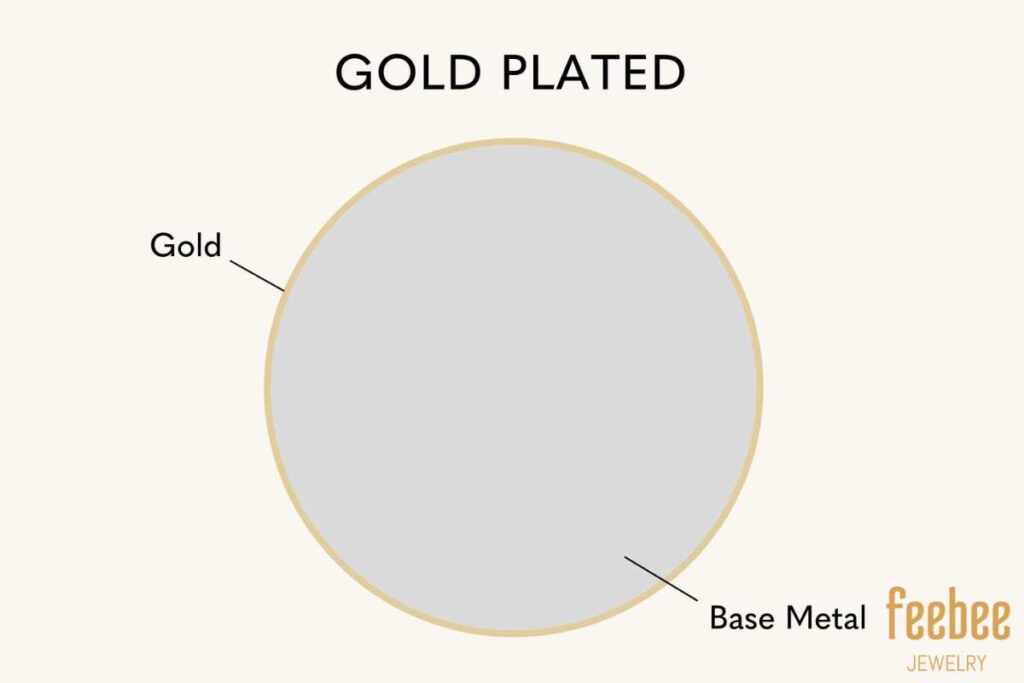
A gold-plated piece of jewelry mostly has less than 0.05% gold content and is considered an economical alternative to solid gold. The base consists of a metal like silver or brass, which is then coated by a very thin layer of gold, using a process called electroplating. It comes with strings attached, needing more care and attention, and it is not very sturdy or durable.
Pros of Gold-Plated Jewelry
- Many gold-plated jewelry pieces made nowadays are completely nickel-free. As such, they are often made of sterling silver or brass. Such items are less likely to cause skin-related problems for sensitive people.
- Catering to different tastes, it is available in a variety of designs.
- Gold-plated jewelry presents the appearance of solid gold but at a significantly lower cost, hence making budget-conscious buyers resort to it.
- When compared to solid gold, gold-plated jewelry is normally lightweight, making it a great alternative.
Cons of Gold-Plated Jewelry
- Gold-plated items are very fragile, as a thin layer of gold covers them, and in just a few months of regular use, the base metal can also be revealed.
- It is not durable and will easily tarnish in the presence of sweat or perfumes, or lotions, or even by moisture in the air, faster than solid gold.
- Skin irritation can occur when the base metal contains nickel or other allergens, especially when the gold layer wears off.
- They are not as durable as they can be scratched easily and also wear down easily within a short time when subjected to the risks of abrasion or friction.
- Although re-plating is possible, it may be costly as compared to replacing the item altogether.
Can You Shower with Gold-Plated Jewelry?
We suggest you take off gold-plated jewelry before getting into the shower. Water, soap, and shampoo may cause the thin gold layer to wear off at an increased rate, exposing the base metal.
Toiletries and other personal-care products usually contain harsh compounds that may wear away the gold covering. Take off the gold-plated jewelry when showering or swimming so that any damage can be avoided, to reduce tarnish, and prolong the life of the jewelry.
What is Gold-Filled Jewelry?
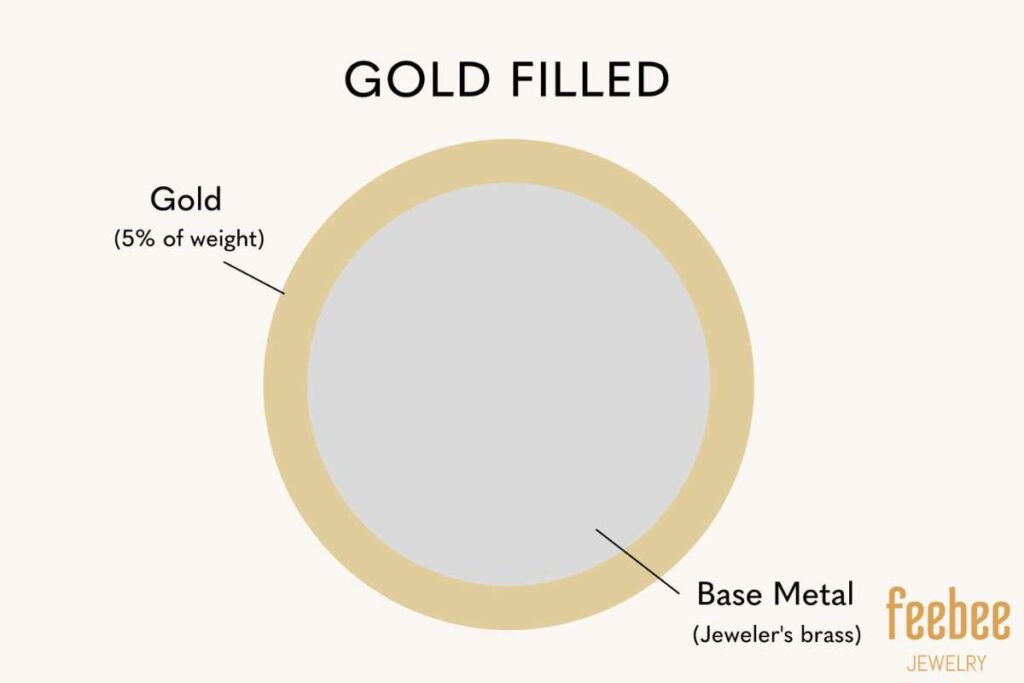
Gold-filled jewelry can be called a better substitute for solid gold jewelry than gold-plated jewelry because it has a thicker gold layer. It is permanently joined to the base metal (bronze or brass) using heat and pressure.
It is around 5% solid gold (up to 100 times more than gold-plated) and thus is durable, does not tarnish, and possesses a longer lifespan. It is budget-friendly but does not offer the capability of producing fine rings or heavily detailed, intricate patterns.
Pros of Gold-Filled Jewelry
- Gold-filled pieces can last for years of wear as long as it is taken care of. It cannot easily fade or discolor with regular use.
- It is loved by people who want to avoid skin allergies, as the gold layer is thicker and usually attached to nickel-free metals (such as brass or copper), hence it is less likely to irritate the skin.
- It provides a lustrous gold appearance without breaking the bank.
- It is not as sturdy as solid gold, but unlike gold-plated jewelry, it can at times be repaired and refurbished.
Cons of Gold-Filled Jewelry
- Compared to solid gold, gold-filled jewelry carries less worth and tends to have a low resale value. Once the gold layer gets worn down, the base metal will then be noticeable, making the piece less attractive.
- The process of repairing, resizing, or deep polishing of gold-filled articles is very complicated and may even destroy the gold coating. Because of this, it is unsuitable for the creation of very fine or intricate details.
- Prolonged exposure to either moisture, perfume, or strong cleaning agents might lead to the wearing off of the gold layer.
- It costs more than the gold-plated jewelry, which may not suit very tight budgets.
- You can shorten its life by rough treatment, such as storing it in a humid environment or abrasive contact with other pieces of jewelry.
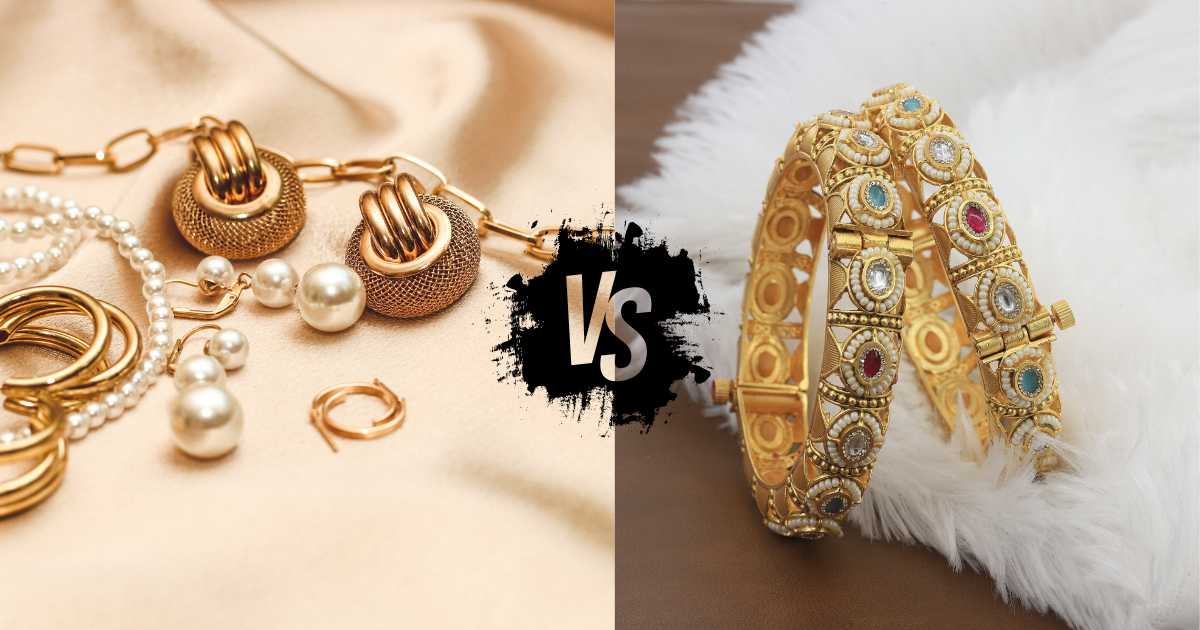
Gold Filled vs Gold Plated Jewelry: What You Need to Know?
One of the questions that we often get when the word “gold” is mentioned is what the difference is between gold-filled and gold-plated jewelry.
While the answer you’re looking for might not be entirely black and white, we owe you a clear shopping conscience, so we will be sharing a few of the most common differences. These differences will help you know which piece to add to your cherished collection:
1. Composition and Thickness of Gold
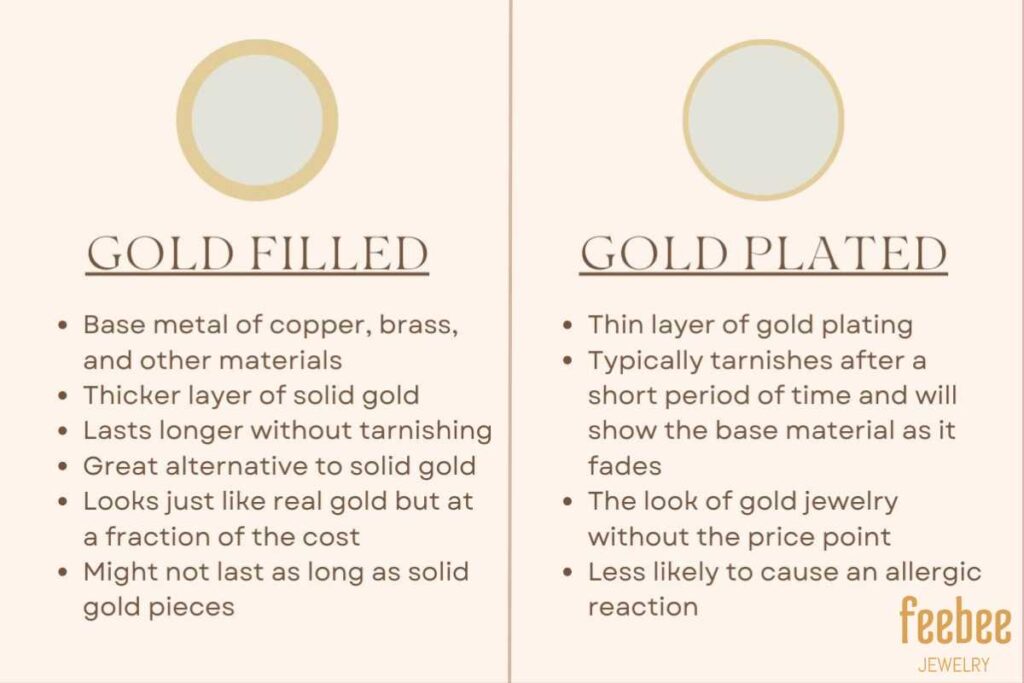
Gold-filled jewelry has a generous thickness of solid gold, at least 5% of the weight of the jewelry. It is superbly layered over a brass or copper foundation, with a lasting, rich, and glowing effect. It is designed to be worn, loved, and handed down, and it never loses its charm.
Gold-plated products, though, bear a very thin layer of gold—typically less than 0.05%—and are very thinly electroplated with gold onto another metal. Beautiful to the gaze, they’re less likely to stand the test of time and can tarnish and wear down easily with use.
2. Durability and Wear Resistance
We can say that gold-filled jewelry is designed for high resistance to damage. Its thickness of gold can endure the wear and tear of day-to-day life and is not so readily scratched, tarnished, or impaired by the ravages of time.
On the contrary, gold-plated jewelry has a lesser quantity of gold deposited on the surface. This lesser quality makes it more prone to discoloration, especially if you are in it for the long run.
3. Skin Sensitivity and Allergies
Nickel-free metals are normally used in gold-filled jewelry. This contributes to it being more suitable for sensitive skin, and the possibility of irritation is decreased.
Compared to this, gold-plated items may contain nickel or other reactive metals below the thin coating of gold. If these come in contact with the skin, they may cause allergies or some discomfort.
4. Price and Value
It comes as no surprise to hear that there exists a huge price gap between gold-filled and gold-plated jewelry. This is owed to the thickness of the gold layer.
Gold-filled jewelry is far more expensive than gold-plated options. Although it is still reasonable when compared with solid gold. Gold-plated jewelry, on the other hand, being the least expensive option, has very little resale value.
A Note on Care and Maintenance
You should consider taking care of your pieces better by following these tips:
Things to Know About Cleaning Gold-Plated Jewelry
- When it comes to gold-plated jewelry, it can be termed “sensitive”, owing to the fact that it is extremely prone to getting contaminated with residue left by oils, sweat, and even the accumulation of dust. To rule out any such events, our experts recommend a thorough cleaning of your favorite pieces, using a soft or velvety cloth for best results.
- Warm a little water in a small bowl and add a drop of mild dish soap. Using a soft cloth, gently wipe the jewelry clean. A quick rule of thumb: never soak gold-plated pieces, as prolonged water immersion can loosen the thin layer of gold and cause it to wear away.
- Just as abrasive cleaners react to your skin and may cause irritation, the same is the case with jewelry items. Stiff brushes and polishing cloths meant for solid gold should never be used since they can ruin plating.
- We have come across many such instances where the culprit behind jewelry giving off a faded look is none other than everyday self-care products like perfumes and lotions. To keep any such problem at bay, use these products prior to putting your accessories on.
Things to Know About Cleaning Gold-Filled Jewelry
- Every now and then, fine gold jewelry needs a thorough cleaning. For that, soaking in a mixture of lukewarm water and a bit of mild dishwashing soap, then gently towel drying, works well. Remember! It should be slightly damp, not dripping wet.
- For the intricate features of the fine gold jewelry, a soft-bristled brush should be employed so that the surface will not be scratched, while lightly buffing polished surfaces.
- The polish of gold-filled jewelry can be maintained by removing sweat and oil residue using a soft, lint-free cloth.
- If you are placing your valuable jewelry in a place, like a bedside drawer, filled with a million other items, in the hope of keeping it safe, we have got news for you. The only outcome that could possibly come out of this scenario is your jewelry getting scratched. The best way to avoid this from happening, store your valuable items separately in a safe place or wrapped with a cloth.
- To maintain the gold’s polish, jewelry should not be worn while applying perfumes or lotions. It should always be the last item put on.
Frequently Asked Questions
Is Gold-Plated Jewelry Better Than Gold-Filled?
No. Gold-plated jewelry has a very fine layer of gold over the surface. If you wear it often, that layer wouldn’t stand a chance. If it comes into contact with water, perfumes, or lotions, it can bleed away or wear off rapidly.
On the contrary, gold-filled jewelry is much thicker and considered a better quality dupe of solid gold. The gold layer is firmly attached to its underlying metal, which makes it more resistant and harder to fade, and it can last several years. If you are concerned with longevity, gold-filled is the wiser choice.
How Long Will Gold-Filled Jewelry Last?
Gold-filled pieces can endure for quite a long time. With proper care, gold-filled jewelry may even last for decades. It is hard to tarnish since the gold coating is usually thick and extremely sturdy. You are recommended to clean it kindly, never subject it to rigorous cleaners or chemicals, and put it into a soft pouch or a lined jewelry box to maintain its best appearance.
Can You Shower with Gold-Filled Jewelry?
You are advised not to take a shower when you have your gold-filled jewelry on. While water itself does not cause any damage to the jewelry, products like soaps, shampoos, and conditioners may end up adhering to its surface and ultimately cause discoloration.
Does Gold-Plated Jewelry Tarnish?
Yes. Because of how thin the gold layer is, it can turn green or discolor with regular use. To prevent this, it is advisable that you do not expose your gold-plated products to moisture, and also, your products must be thoroughly wiped with a soft cloth after every usage. A quick tip is to keep them separated in a soft pouch or jewelry box. This isn’t going to make them last forever, but it will hold them out for a bit longer.
Discover the Perfect Piece for You
The long-standing debate between gold-filled vs gold-plated jewelry eventually comes down to your preferences, comfort and style. At Feebee Jewelry, there is nothing that makes our day more than the comfort in knowing that your cherished pieces keep on being a part of your style, and more importantly, your wardrobe for years to come.
If your clasp breaks, your stone needs attention, or your chain is in search of a safe place, we are just a message away. We’ll give you the kind of care tips only years in jewelry can teach.

Perry Xu